
Executive Summary
- The hepatopancreas is the metabolic center of shrimp, controlling digestion, nutrient absorption, energy storage, and detoxification.
- Poor hepatopancreas health in shrimp reduces the ability to convert feed nutrients into growth, leading to higher FCR and unstable production performance.
- Intensive farming conditions increase metabolic burden through high feeding rates, environmental stress, and pathogen pressure.
- Supporting hepatopancreas function through targeted nutrition helps maintain feed efficiency, growth consistency, and production stability.
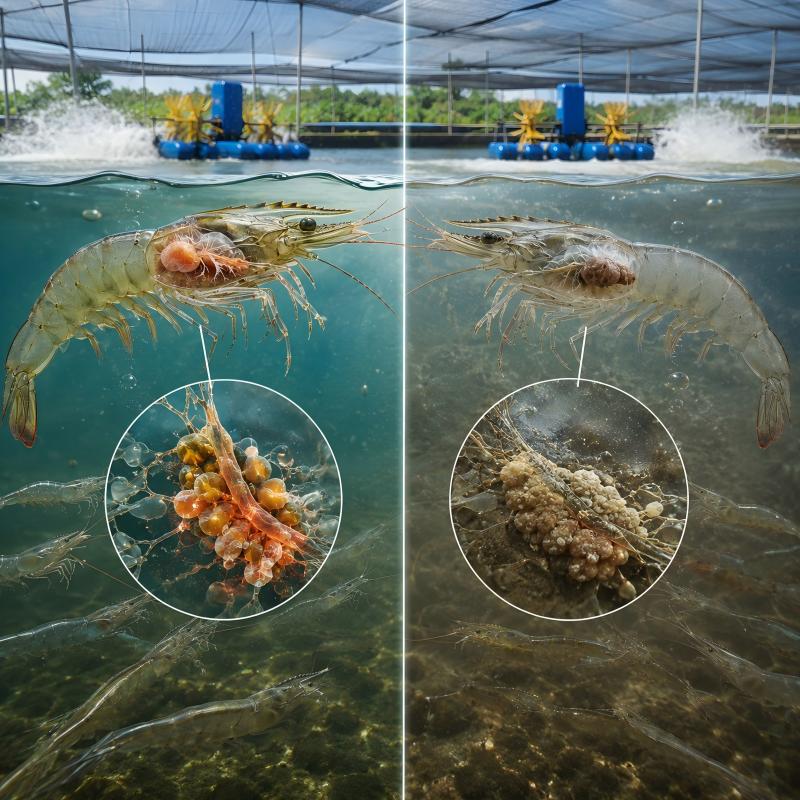
Why Shrimp Growth Problems Often Start Inside the Hepatopancreas
In modern intensive shrimp farming, producers usually focus on three major factors:
- Feed quality
- Water quality
- Disease prevention
However, one critical factor is often overlooked:
Can shrimp actually digest and utilize the nutrients provided?
Many farms experience similar challenges:
- Feed input increases, but growth slows.
- FCR gradually rises.
- Shrimp size becomes uneven.
- Mortality increases during stressful periods.
The hidden problem is often related to the condition of the shrimp hepatopancreas.
The hepatopancreas functions as the shrimp’s internal processing center. It produces digestive enzymes, manages nutrient metabolism, stores energy reserves, and supports physiological defense.
When this organ is under continuous pressure, shrimp cannot efficiently convert feed into biomass.
Therefore, improving hepatopancreas health in shrimp is not only a biological concern. It is directly connected with production efficiency and farm profitability.
Why the Hepatopancreas Is Critical for Shrimp Nutrition
The hepatopancreas in shrimp performs multiple functions that directly determine how effectively feed nutrients are utilized.
Unlike mammals with separate liver and pancreas systems, shrimp rely on this single organ to coordinate digestion, metabolism, and energy management.
| Hepatopancreas Function | Importance in Shrimp Production |
|---|---|
| Digestive enzyme production | Breaks down proteins, lipids, and carbohydrates for utilization |
| Nutrient absorption | Supports efficient conversion of feed into growth |
| Energy storage | Provides reserves for molting and stress recovery |
| Detoxification | Helps maintain metabolic stability under environmental challenges |
A healthy hepatopancreas allows shrimp to efficiently process nutrients and maintain stable growth.
However, under intensive farming conditions, this organ faces increasing workload from:
- higher feeding frequency,
- faster growth targets,
- environmental fluctuations,
- continuous metabolic activity.
When the metabolic demand exceeds the organ’s capacity, feed efficiency begins to decline.
How Hepatopancreas Stress Reduces Shrimp Farm Performance
Hepatopancreas problems usually develop gradually.
Before obvious mortality occurs, producers often observe changes in production indicators.
1. Higher FCR and Reduced Feed Efficiency
One of the earliest signs of reduced hepatopancreas function is increasing feed conversion ratio (FCR).
When digestive enzyme activity and nutrient processing efficiency decline, shrimp require more feed to achieve the same growth.
This creates a direct economic impact:
- higher feed cost,
- slower biomass increase,
- reduced profitability.
Feed quality is important, but feed utilization depends equally on the shrimp’s ability to digest and absorb nutrients.
As discussed in Why Nutrient Leaching Reduces Aquaculture Feed Efficiency, nutrient availability before digestion is a key factor influencing overall feed performance.
2. Poor Growth and Uneven Size Distribution
Healthy shrimp populations should show relatively consistent growth.
When the hepatopancreas cannot efficiently support nutrient absorption in shrimp, differences between individuals become more noticeable.
Common production results include:
- slower weight gain,
- uneven shrimp size,
- lower harvest uniformity.
This problem is especially important for commercial farms because size variation affects harvest planning and market value.
3. Molting Stress and Reduced Recovery Ability
Molting requires significant energy reserves.
The hepatopancreas stores important energy sources, especially lipids, which are mobilized during this process.
When energy storage capacity declines, shrimp may experience:
- slower recovery after molting,
- increased sensitivity to stress,
- unstable survival during critical periods.
Maintaining a healthy hepatopancreas therefore supports not only growth but also production stability.
What Increases Hepatopancreas Metabolic Burden?
The hepatopancreas is designed to handle continuous metabolic activity.
However, intensive aquaculture systems create conditions where this organ must work under constant pressure.
High Feeding Intensity
Higher stocking density requires increased feed input.
While adequate feeding supports growth, excessive digestive demand can increase pressure on the hepatopancreas.
Continuous production of digestive enzymes requires significant metabolic energy.
Oxidative Stress
High-intensity farming conditions can increase reactive oxygen species (ROS), affecting cellular stability.
Maintaining antioxidant defense systems, including:
- SOD (Superoxide Dismutase)
- CAT (Catalase)
- GSH-Px (Glutathione Peroxidase)
is important for protecting hepatopancreatic cells.
This connects with the role of nutrition in managing oxidative challenges, as explained in How Yeast Culture Regulates Oxidative Stress in Shrimp.
Pathogen and Environmental Pressure
Pathogen challenges and unstable water conditions increase the shrimp’s physiological workload.
Factors such as:
- ammonia stress,
- organic load,
- microbial imbalance,
can increase detoxification and immune demands.
Instead of supporting growth, more energy is redirected toward maintaining internal balance.
Nutritional Strategies to Support Hepatopancreas Health
Improving hepatopancreas health in shrimp does not simply mean adding more nutrients.
The goal is to help shrimp use nutrients more efficiently while reducing unnecessary metabolic pressure.
Effective nutritional strategies focus on three areas:
1. Supporting Efficient Nutrient Utilization
Functional nutritional ingredients can provide readily available components, including:
- peptides,
- amino acids,
- nucleotides,
- fermentation metabolites.
These compounds help reduce the energy required for nutrient processing and support more efficient metabolism.
The result is more energy available for:
- growth,
- immune activity,
- tissue recovery.
2. Strengthening Antioxidant Defense
Because the hepatopancreas is highly active metabolically, it is vulnerable to oxidative damage.
Nutritional support that improves antioxidant capacity helps maintain:
- cellular integrity,
- metabolic efficiency,
- stress resistance.
3. Maintaining Digestive and Microbial Balance
A stable digestive environment supports better shrimp digestive health.
Yeast culture provides functional components such as:
- β-glucans
- mannan oligosaccharides (MOS)
- fermentation-derived metabolites
that support microbial balance and overall digestive stability.
By improving the internal environment, yeast culture helps reduce unnecessary pressure on the hepatopancreas.
Why Protecting Hepatopancreas Health Improves Farm Profitability
From a commercial perspective, protecting the hepatopancreas is a strategy for improving production efficiency.
| Improvement | Business Benefit |
|---|---|
| Better nutrient utilization | Lower feed cost per kg shrimp |
| Stable FCR | Improved production efficiency |
| Stronger stress tolerance | Reduced production risk |
| More consistent growth | Better harvest value |
For intensive shrimp farms, even small improvements in feed utilization can create significant economic benefits because feed represents the largest operating cost.
The objective is not simply to increase feeding.
The objective is to ensure that every kilogram of feed is efficiently converted into shrimp biomass.
Conclusion: Hepatopancreas Health Is the Foundation of Efficient Shrimp Nutrition
The hepatopancreas is the connection point between feed, digestion, metabolism, and growth performance in shrimp.
When this organ remains healthy, shrimp can better utilize nutrients, maintain energy reserves, and respond to production stress.
However, intensive farming conditions continuously increase metabolic pressure.
Supporting hepatopancreas health in shrimp through effective nutritional strategies helps maintain:
- better feed efficiency,
- stable growth,
- improved production consistency.
For modern shrimp production, protecting the hepatopancreas is not only about animal health.
It is about improving the efficiency and profitability of the entire farming system.