
Key Insights
- Intensive RAS aquaculture systems create continuous digestive challenges caused by high stocking density, intensive feeding, and environmental fluctuations.
- Maintaining digestive stability in RAS aquaculture is essential for consistent nutrient absorption, feed efficiency, and production performance.
- Digestive performance depends not only on feed quality but also on intestinal function, microbial conditions, and environmental adaptation.
- Yeast culture provides fermentation-derived metabolites that support digestive function and help maintain stable production under intensive farming conditions.
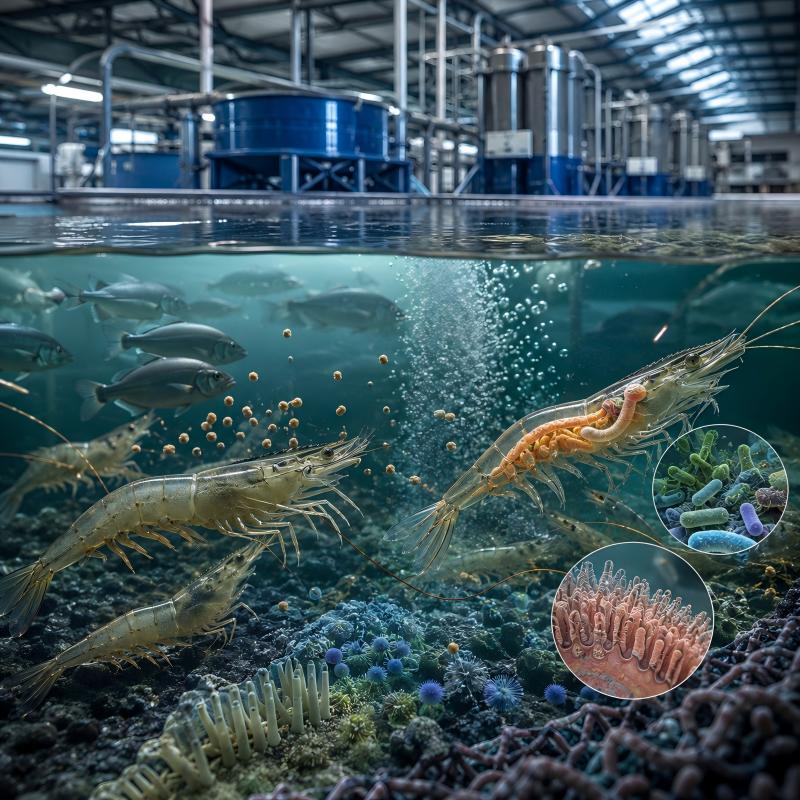
Supporting Digestive Stability in RAS Aquaculture
Recirculating aquaculture systems (RAS) have become an important production model for intensive fish and shrimp farming because they allow higher stocking density, controlled water management, and efficient resource utilization.
However, improved environmental control does not eliminate biological challenges. In high-density RAS aquaculture production, animals experience continuous feeding pressure, microbial fluctuations, and metabolic stress that can gradually affect digestive performance.
Digestive instability often develops before obvious health problems appear. Fish or shrimp may continue consuming feed, but reduced digestive efficiency can influence:
- nutrient absorption,
- growth uniformity,
- feed conversion ratio (FCR),
- production consistency.
For producers and feed manufacturers, improving digestive stability in RAS aquaculture is therefore a practical strategy to protect feed value and maintain predictable production outcomes.
Unlike acute disease events, digestive challenges in RAS systems are often related to long-term production pressure. Supporting a stable digestive environment helps aquatic animals maintain efficient nutrient utilization under intensive farming conditions.
Why Digestive Performance Becomes Unstable in RAS Aquaculture
Although RAS technology provides better control over water parameters, intensive production conditions still create continuous demands on animal digestion.
Several characteristics of recirculating aquaculture systems can influence digestive performance:
| RAS Production Condition | Impact on Digestive Stability |
|---|---|
| High stocking density | Increases metabolic demand and physiological pressure |
| Intensive feeding programs | Creates higher digestive workload |
| Continuous water reuse | Increases interaction with dissolved metabolites and organic compounds |
| High microbial activity | Creates fluctuations in the digestive environment |
| Fine suspended particles | May affect feeding conditions and intestinal interaction |
High Stocking Density Increases Digestive Pressure
High-density production is one of the main advantages of RAS systems. However, increased biomass also means animals must continuously adapt to higher metabolic demand.
When digestive capacity cannot fully match feed input, nutrient utilization efficiency may decline. This can result in:
- slower growth,
- inconsistent animal size,
- increased feed cost per unit production.
For shrimp farming and fish farming operations, maintaining stable digestion becomes increasingly important as production intensity increases.
Intensive Feeding Requires Stable Digestive Function
RAS production relies on efficient feed conversion because feed represents one of the largest operating costs.
However, feed efficiency is determined by more than feed formulation alone.
The digestive system must effectively process nutrients through:
- digestive enzyme activity,
- nutrient absorption,
- intestinal function,
- microbial interaction.
When digestive performance fluctuates, even high-quality feed may not achieve expected utilization efficiency.
This is why improving nutrient utilization is an important consideration when optimizing intensive aquaculture production systems.
Stable Water Parameters Do Not Always Mean Stable Digestion
One common misunderstanding in RAS management is assuming that controlled water conditions automatically guarantee stable animal performance.
RAS systems can maintain relatively stable:
- dissolved oxygen,
- temperature,
- ammonia control,
- water circulation.
However, digestive conditions inside animals are influenced by additional factors, including:
- feeding intensity,
- organic loading,
- microbial metabolites,
- intestinal environment.
Therefore, digestive management should be considered together with water quality management.
A stable external environment provides the foundation, but maintaining digestive function requires additional nutritional and biological support.
How RAS Conditions Influence Digestive Function
Digestive performance depends on the interaction between feed utilization, intestinal structure, microbial conditions, and animal physiology.
In intensive RAS aquaculture, maintaining balance among these factors helps improve production stability.
Supporting Nutrient Utilization and Feed Efficiency
Efficient digestion allows fish and shrimp to convert feed nutrients into biomass more effectively.
When digestion becomes unstable, animals may consume similar feed quantities but obtain less nutritional value from the same feed input.
Reduced nutrient utilization can influence:
- protein conversion,
- energy absorption,
- growth consistency,
- overall feed efficiency.
For producers evaluating feed performance issues, digestive stability should be considered alongside feed quality and formulation.
Feed nutrient availability is also affected by environmental factors. Understanding how nutrients are lost before effective utilization can help improve feeding strategies. More details can be found in our article about aquaculture feed efficiency and nutrient loss mechanisms.
Maintaining Intestinal Barrier Integrity
The intestinal structure plays an important role in maintaining digestive efficiency.
A stable intestinal environment supports:
- nutrient absorption,
- digestive resilience,
- protection against external challenges.
Under intensive production conditions, maintaining intestinal barrier integrity helps animals better adapt to continuous feeding and environmental pressure.
Maintaining Microbial Balance in Intensive Systems
Microbial communities are closely connected with digestive performance.
However, the goal is not simply increasing microbial populations. The key objective is maintaining a balanced microbial environment that supports stable digestion.
Factors affecting microbial conditions include:
- feed composition,
- organic matter availability,
- water reuse characteristics,
- production density.
Supporting microbial balance helps create a more stable digestive environment and improves the consistency of nutrient processing.
Signs of Digestive Instability in Intensive Aquaculture
Digestive challenges in RAS systems are not always visible through obvious disease symptoms. In many cases, production teams first notice changes in feeding behavior, growth consistency, or feed conversion performance.
Monitoring these indicators helps identify digestive problems before they affect overall farm profitability.
| Production Observation | Possible Digestive Cause | Potential Impact |
|---|---|---|
| Reduced feeding response | Digestive stress or reduced digestive capacity | Lower growth performance |
| Uneven animal size | Inconsistent nutrient absorption | Increased production variation |
| Higher feed conversion ratio (FCR) | Reduced feed utilization efficiency | Higher feed cost |
| Slow recovery after environmental changes | Reduced digestive resilience | Lower production stability |
| Variable growth despite acceptable water quality | Internal digestive imbalance | Reduced predictability |
For intensive shrimp and fish production, these indicators are important because digestive instability can gradually reduce the economic efficiency of the entire production cycle.
Unlike sudden disease events, digestive issues often develop gradually. A decline in digestive performance may first appear as reduced feed response or inconsistent growth before becoming a larger production challenge.
How Yeast Culture Supports Digestive Stability in RAS Aquaculture
Functional feed strategies have become increasingly important in intensive aquaculture systems where animals require additional nutritional support beyond basic feed ingredients.
Yeast culture is widely used as a functional feed ingredient because it contains fermentation-derived metabolites and bioactive compounds that support digestive performance.
Its role is not simply to increase microbial activity. Instead, yeast culture supports multiple biological processes associated with stable digestion, including microbial balance, nutrient utilization, and intestinal function.
Supporting Microbial Balance in the Digestive Environment
A stable microbial environment is closely associated with consistent digestive performance.
In intensive RAS aquaculture, microbial conditions can change due to:
- high feeding intensity,
- organic matter accumulation,
- continuous water circulation,
- stocking density fluctuations.
These changes may influence digestive efficiency and nutrient processing.
Yeast culture provides fermentation metabolites and functional components that support a balanced digestive environment.
By helping maintain favorable microbial conditions, yeast culture contributes to more consistent digestive function under intensive production pressure.
For more information about microbial management in intensive aquaculture systems, see our article about microbial balance in biofloc aquaculture systems.
Supporting Nutrient Utilization and Digestive Efficiency
The economic value of feed depends not only on the amount consumed but also on how efficiently nutrients are digested and absorbed.
Yeast culture supports digestive processes related to:
- nutrient assimilation,
- digestive enzyme activity,
- feed utilization,
- growth consistency.
For RAS producers, improving feed efficiency is especially important because intensive systems depend on maximizing production output from controlled environments.
A more stable digestive system allows animals to better utilize available nutrients and maintain more predictable growth performance.
Supporting Intestinal Function Under Intensive Conditions
The intestinal tract is a critical interface between feed nutrients and animal performance.
Continuous intensive production can create pressure on intestinal function, affecting digestive resilience and nutrient absorption.
Yeast culture supports intestinal health by providing fermentation-derived components that help maintain normal digestive conditions.
Important biological factors include:
- intestinal barrier integrity
- nutrient absorption efficiency
- digestive resilience
- microbial stability
Maintaining these functions helps fish and shrimp better adapt to intensive farming conditions.
Supporting Digestive Resilience During Production Fluctuations
RAS systems are designed for stable production, but operational fluctuations still occur.
Examples include:
- changes in feeding intensity,
- biomass increases,
- organic load variation,
- environmental adjustments.
Animals with stronger digestive resilience are better able to maintain performance during these periods.
By supporting digestive function and microbial balance, yeast culture provides nutritional support for maintaining production consistency in intensive aquaculture systems.
Practical Strategies for Maintaining Digestive Stability in RAS
Maintaining digestive stability in RAS aquaculture requires a combination of environmental control, feeding management, and functional nutrition strategies.
Maintain Consistent Feeding Management
Sudden changes in feeding levels can increase digestive pressure.
Consistent feeding programs help animals maintain stable digestive activity and improve nutrient utilization efficiency.
Important considerations include:
- appropriate feeding rates,
- regular feeding schedules,
- monitoring feed response.
Control Organic Loading
Organic matter influences microbial conditions in recirculating systems.
Effective management of:
- solids removal,
- biofilter performance,
- water circulation,
helps maintain a more stable production environment.
A balanced microbial environment supports more predictable digestive performance.
Use Functional Feed Ingredients
Basic nutrition provides essential nutrients, while functional feed ingredients provide additional biological support.
In intensive systems, ingredients such as yeast culture are used to support:
- digestive function,
- microbial balance,
- nutrient utilization,
- production stability.
This approach helps producers address digestive challenges associated with high-intensity farming.
Monitor Performance Indicators
Regular monitoring allows producers to identify digestive challenges earlier.
Key indicators include:
- feed conversion ratio,
- growth uniformity,
- feeding behavior,
- survival performance,
- recovery after stress events.
Combining production data with nutritional strategies helps improve long-term RAS management decisions.
FAQ
Does RAS aquaculture affect digestive performance?
Yes. Although RAS systems provide better environmental control, intensive stocking density, frequent feeding, and continuous water reuse can create digestive pressure that affects nutrient utilization and production consistency.
Why can feed efficiency decrease even when water quality is stable?
Stable water parameters do not always guarantee stable digestion. Digestive performance is also influenced by intestinal function, microbial conditions, feeding intensity, and nutrient absorption efficiency.
How does yeast culture support digestive stability in aquaculture?
Yeast culture provides fermentation-derived metabolites and functional components that support microbial balance, digestive function, and nutrient utilization under intensive farming conditions.
Is digestive instability always caused by disease?
No. Digestive instability can occur without disease outbreaks. Long-term production pressure, feeding intensity, and environmental fluctuations can gradually reduce digestive efficiency.
Can yeast culture be used in RAS shrimp and fish production?
Yes. Yeast culture is commonly included in functional feed strategies for intensive aquaculture systems, including shrimp and fish production where digestive stability and feed efficiency are important.
Conclusion
Maintaining digestive stability in RAS aquaculture is essential for improving feed utilization, growth consistency, and production predictability.
While RAS technology provides advanced environmental control, intensive production still creates continuous challenges for digestive function. Supporting microbial balance, intestinal function, and nutrient utilization helps animals maintain performance under demanding conditions.
Yeast culture provides a practical nutritional solution for producers seeking to improve digestive resilience and maintain stable production outcomes in intensive aquaculture systems.