
Modern poultry production systems are placing more pressure on intestinal stability than ever before.
In many commercial farms, gut-related performance problems appear before visible disease outbreaks occur. Producers may first notice:
- inconsistent feed intake
- wet litter
- uneven bird growth
- unstable FCR
- slower recovery after stress periods
In high-density broiler and layer systems, these issues are increasingly linked to subclinical intestinal stress rather than acute disease alone.
As poultry producers continue reducing antibiotic usage, nutritional strategies that support digestive stability are becoming more important across the feed industry. Many companies now evaluate antibiotic alternative in animal feed programs designed to maintain production consistency under commercial stress conditions.
Among these strategies, yeast culture poultry gut health applications are receiving growing attention in both broiler and layer nutrition systems.
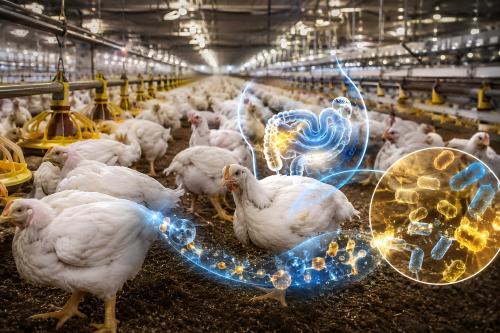
Why Poultry Gut Health Challenges Are Increasing
Modern poultry genetics are designed for rapid growth and high production efficiency. However, faster growth also places greater pressure on digestive function and intestinal stability.
Several commercial factors now contribute to increasing gut health challenges.
Heat Stress Cycles
Environmental temperature fluctuations may affect:
- feed intake consistency
- intestinal permeability
- nutrient absorption efficiency
Heat stress is now considered one of the major hidden causes of unstable flock performance in commercial poultry systems. Many producers addressing heat-related digestive stress are also optimizing their feeding programs through targeted poultry nutrition solutions focused on intestinal resilience.
Reduced Antibiotic Usage
As more poultry producers move toward reduced-antibiotic systems, maintaining intestinal balance becomes more difficult under commercial conditions.
Without stable digestive function, producers may experience:
- inconsistent growth
- litter quality problems
- feed efficiency fluctuation
- greater stress sensitivity
Feed Ingredient Variability
Raw material inconsistency, ingredient substitutions, and mycotoxin pressure may negatively affect digestive stability.
Even relatively small dietary changes can influence:
- nutrient digestibility
- intestinal environment stability
- manure consistency
- flock uniformity
Higher Stocking Density
Modern poultry systems are optimized for production efficiency, but higher stocking density may increase environmental and intestinal stress pressure throughout the production cycle.
Where Yeast Culture Fits in Poultry Nutrition
Unlike live yeast products that mainly focus on microbial activity, yeast culture products are fermentation-derived nutritional ingredients commonly used in commercial feed formulations.
Most Saccharomyces cerevisiae culture products contain:
- fermentation metabolites
- peptides
- organic compounds
- yeast-derived nutrients
- functional fermentation components
Instead of functioning as direct antimicrobial agents, they are generally incorporated into feeding programs designed to support:
- digestive stability
- feed efficiency consistency
- intestinal resilience during stress periods
In many poultry formulations, Saccharomyces cerevisiae culture products are used as part of broader nutritional strategies supporting gut stability under commercial production conditions.
4 Practical Reasons Poultry Producers Use Yeast Culture
1. Supporting Gut Stability During Stress Periods
Commercial poultry flocks regularly experience stress associated with:
- vaccination
- transportation
- heat exposure
- feed transitions
During these periods, intestinal balance may become unstable, affecting overall production consistency.
Many producers use yeast culture benefits poultry strategies to help support digestive stability during challenging production phases.
2. Helping Maintain Feed Efficiency Consistency
Feed represents one of the largest costs in poultry production.
When intestinal function becomes unstable, producers often observe:
- fluctuating FCR
- inconsistent weight gain
- uneven flock performance
For this reason, poultry feed efficiency is closely connected to intestinal stability and nutrient utilization consistency.
Some feeding programs incorporate fermentation-derived nutritional solutions such as Enzyme PLUS – Poultry Use to support digestive performance under commercial production conditions.
3. Supporting Intestinal Barrier Resilience
The intestinal lining functions as both a protective barrier and a nutrient absorption surface.
Under stress conditions, intestinal integrity may become compromised, potentially affecting:
- nutrient absorption
- digestive efficiency
- recovery speed
Modern poultry nutrition programs increasingly focus on maintaining:
- villi structure
- gut lining stability
- intestinal barrier resilience
This is one reason why poultry intestinal health has become a major focus in commercial feed formulation.
4. Better Compatibility With Modern Feed Processing
One practical issue often overlooked in feed additive selection is processing stability.
In commercial poultry feed mills, pelleting conditions may reduce the effectiveness of heat-sensitive ingredients. Because of this, many buyers now pay closer attention to:
- thermal stability
- pelleting survivability
- batch consistency
- storage stability
Some fermentation-derived yeast culture for feed applications are specifically designed for improved stability during commercial feed processing and pelleting conditions.
For export-oriented feed manufacturers, maintaining functional consistency after processing is often more important than laboratory specifications alone.
Why Pelleting Stability Matters More Than Many Buyers Expect
In poultry feed manufacturing, additives are commonly exposed to:
- steam conditioning
- mechanical pressure
- elevated pelleting temperatures
If functional activity declines during processing, field performance may become inconsistent across different production batches.
This is particularly important for:
- integrated poultry operations
- large commercial feed mills
- export-oriented feed manufacturers
As a result, many buyers now evaluate not only nutritional specifications, but also processing stability and production consistency before selecting a supplier.
Broilers and Layers Have Different Gut Health Priorities
Different poultry production systems focus on different digestive performance goals.
| Production Type | Main Gut Health Focus |
|---|---|
| Broilers | FCR consistency, growth rate, nutrient absorption |
| Layers | Long-term intestinal stability, feed intake consistency |
| Breeders | Stress management and production stability |
Broiler feeding programs often focus more heavily on feed conversion efficiency and rapid growth under intensive production conditions, while layer systems typically prioritize long-term digestive stability and consistent production performance. Many producers therefore apply different nutritional strategies for broiler performance optimization and layer gut health management depending on production goals.
What Feed Manufacturers Evaluate Before Purchasing Yeast Culture
Professional feed manufacturers typically evaluate much more than basic nutritional specifications when selecting a supplier.
Important purchasing considerations often include:
- fermentation consistency
- pelleting stability
- batch-to-batch uniformity
- production capacity
- export reliability
- technical application support
- OEM/ODM capability
International buyers may also prioritize suppliers operating under recognized quality management and feed safety systems such as ISO, GMP+, or FAMI-QS standards.
For many distributors and feed mills, supplier consistency is closely connected to long-term customer confidence and production stability.
Choosing the Right Yeast Culture Supplier
Selecting a yeast culture manufacturer is not simply about finding the lowest price.
Reliable suppliers should be able to provide:
- stable fermentation processes
- consistent product quality
- technical formulation support
- commercial-scale production capability
- international export experience
For feed manufacturers operating in competitive poultry markets, long-term consistency is often more valuable than short-term cost reduction.
Conclusion
Modern poultry gut health management is no longer focused only on disease prevention.
Today, producers are increasingly concerned with maintaining:
- production consistency
- feed efficiency stability
- intestinal resilience under stress
- long-term flock performance
As commercial poultry systems continue evolving toward reduced-antibiotic production models, yeast culture poultry gut health solutions are becoming an increasingly important part of nutritional management strategies.
For feed manufacturers, distributors, and poultry producers, selecting a stable and application-focused yeast culture product may help support more consistent poultry performance under modern commercial production conditions.