
Key Insights
- Lactation feed intake directly affects sow productivity, piglet performance, and long-term reproductive stability.
- Yeast culture for reproductive sows supports digestive consistency and more stable nutrient utilization during gestation and lactation.
- Maintaining fermentation continuity may help reduce performance fluctuation during heat stress and high metabolic demand periods.
- Stable sow nutrition programs contribute to improved production predictability, litter consistency, and operational efficiency in commercial swine systems.
| Commercial Challenge | Operational Impact |
|---|---|
| Reduced lactation feed intake | Lower milk production and slower recovery |
| Excessive body condition loss | Reduced reproductive consistency |
| Heat stress pressure | Greater seasonal reproductive variability |
| Inconsistent litter performance | Lower production predictability |
Introduction
In modern sow production, reproductive efficiency depends heavily on nutritional consistency during gestation and lactation.
Commercial producers commonly face:
- Reduced feed intake during lactation
- Body condition loss
- Heat stress pressure
- Inconsistent litter performance
Even small fluctuations during the reproductive cycle may affect milk production, piglet uniformity, and long-term sow productivity.
This is why many commercial feeding programs now focus on maintaining stable digestive activity, predictable nutrient utilization, and fermentation continuity throughout reproductive stages.
As part of broader commercial Swine Solutions, yeast culture supplementation is increasingly integrated into sow nutrition programs designed to improve operational consistency under practical production conditions.
Why Lactation Feed Intake Matters in Sow Performance
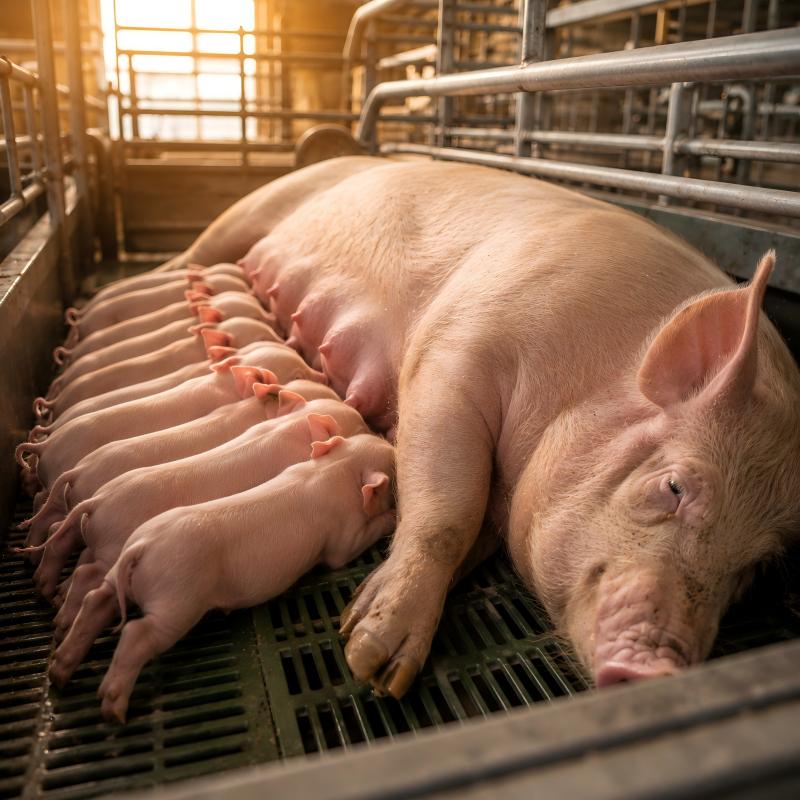
Lactation is one of the most metabolically demanding stages in commercial sow production.
During this period, nutrient demand increases significantly due to milk production, piglet support, and body condition maintenance. When feed intake declines, sow performance may become increasingly difficult to stabilize.
Reduced lactation intake may contribute to:
- Lower milk production
- Increased body condition loss
- Slower reproductive recovery
- Greater production variability between reproductive cycles
For commercial sow operations, maintaining stable intake is not only a nutritional target — it is a production management priority closely linked to long-term reproductive consistency.
In commercial sow nutrition, the economic impact of reproductive inconsistency often exceeds the cost of nutritional stabilization strategies.
How Yeast Culture Supports Reproductive Sow Performance
1. Stabilize Digestive Activity During Lactation
Digestive fluctuation during lactation may reduce intake consistency and nutrient utilization efficiency.
Yeast culture for reproductive sows provides fermentation-derived metabolites, peptides, enzymes, and organic compounds that help support a more stable digestive environment during periods of high metabolic demand.
This may contribute to:
- More stable feed intake
- Improved digestive consistency
- Better nutrient utilization stability
- Reduced digestive fluctuation during lactation
Products such as Enzyme PLUS – Swine Use are increasingly used in commercial sow feeding programs focused on improving digestive stability and maintaining production consistency throughout reproductive stages.
2. Support Body Condition Recovery
Excessive body condition loss during lactation may negatively affect long-term sow productivity and reproductive recovery.
Commercial sow operations increasingly prioritize nutritional strategies that help maintain more stable metabolic performance throughout reproductive cycles.
Supporting digestive stability and nutrient utilization may help contribute to:
- Improved recovery after lactation
- More stable reproductive performance
- Reduced metabolic fluctuation
- Better long-term sow productivity
For large-scale sow systems, maintaining consistent body condition is closely connected to reproductive predictability and herd management efficiency.
3. Support Litter Uniformity and Early-Life Nutrition Stability
Lactation stability directly influences piglet development during early-life stages.
A stable sow lactation environment may help support more consistent litter performance and early-life nutrition support for piglets during transition stages. Producers focused on post-weaning feeding strategies can also explore our Yeast Culture for Piglets guide for digestive support during early adaptation periods.
Commercial producers increasingly recognize that sow nutritional consistency influences not only reproductive performance, but also downstream piglet uniformity and production stability.
Why Reproductive Consistency Matters in Commercial Sow Operations
Modern sow operations increasingly focus on reproductive predictability rather than isolated peak performance.
Production consistency affects:
- Farrowing management
- Piglet flow planning
- Labor efficiency
- Long-term herd productivity
Stable reproductive performance allows producers to maintain more predictable production scheduling and reduce operational fluctuation across reproductive cycles.
In large-scale sow production systems, consistency across reproductive cycles often creates more long-term value than short-term peak output.
Maintaining fermentation continuity during gestation and lactation may help support more stable digestive activity and more predictable nutrient utilization throughout changing production conditions.
Producers evaluating broader fermentation-focused nutrition strategies can also explore our Yeast Culture for Swine guide for commercial swine digestive stability management.
Heat Stress and Summer Infertility Pressure in Sows
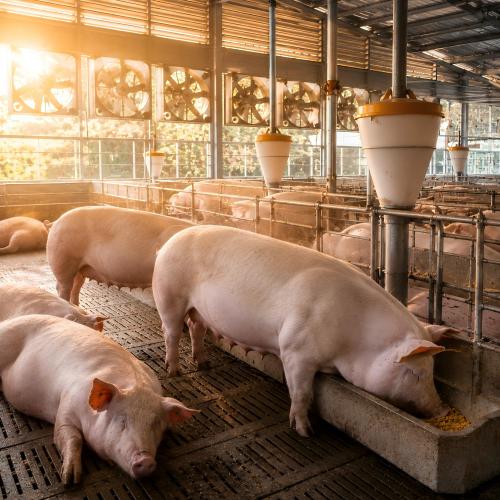
Heat stress remains one of the most significant challenges in commercial sow production, particularly in tropical and subtropical regions.
During extended hot seasons, many commercial operations experience:
- Reduced lactation intake
- Lower feeding consistency
- Slower reproductive recovery
- Greater reproductive variability commonly associated with summer infertility pressure
As metabolic demand increases during lactation, heat stress may further reduce intake stability and production predictability.
For this reason, many sow nutrition programs increasingly focus on maintaining digestive stability and fermentation continuity during periods of environmental stress.
In modern commercial production systems, reducing seasonal fluctuation is often just as important as maximizing peak reproductive output.
Why Pelleting Stability Matters in Commercial Sow Feed
Commercial sow feed commonly undergoes pelleting temperatures of approximately 85–90°C.
Under these processing conditions, ingredient stability becomes increasingly important for maintaining reliable feed performance and manufacturing consistency.
Compared with highly temperature-sensitive live microbial products, yeast culture products containing fermentation metabolites are often considered more compatible with commercial feed manufacturing environments.
Strong pelleting stability helps support:
- Reliable ingredient functionality
- Better feed consistency
- Stable shelf-life performance
- More predictable mixing uniformity
- Improved manufacturing reliability
In large-scale sow production systems, manufacturing consistency is closely connected to feeding consistency at the farm level.
Yeast Culture vs Live Yeast in Sow Diets
Although yeast culture and live yeast are both used in sow nutrition, their industrial functionality under commercial production conditions is different.
| Feature | Yeast Culture | Live Yeast |
|---|---|---|
| Main Focus | Fermentation metabolites and digestive stability | Live microbial activity |
| Pelleting Stability | Strong | More temperature-sensitive |
| Shelf-Life Consistency | Stable | More variable |
| Consistency During Metabolic Stress | Strong | More variable |
| Commercial Manufacturing Compatibility | High | Depends on processing conditions |
| Commercial Feeding Objective | Production consistency | Live microbial supplementation |
In commercial sow feeding systems, yeast culture is increasingly selected because it combines digestive support with stronger industrial compatibility and more stable performance under practical production conditions.
FAQ
Can yeast culture improve lactation feed intake in sows?
Field nutrition observations suggest yeast culture supplementation may help support more stable digestive activity and feed intake consistency during lactation.
Is yeast culture suitable for commercial pelleted sow feed?
Yes. Industrial-grade yeast culture products are commonly used under commercial pelleting temperatures of approximately 85–90°C.
Can yeast culture help support reproductive consistency?
Many commercial sow feeding programs use yeast culture to support digestive stability and fermentation continuity, which may contribute to more predictable reproductive performance across production cycles.
Executive Takeaway: The Reproductive Consistency Advantage
Modern sow nutrition increasingly focuses on maintaining stable intake, predictable lactation performance, and long-term reproductive consistency under commercial production conditions.
Integrating yeast culture for reproductive sows into commercial feeding programs is increasingly viewed as part of a broader operational stability strategy rather than simply a nutritional adjustment.
By supporting digestive consistency, nutrient utilization stability, and fermentation continuity, yeast culture supplementation may help contribute to:
- More stable lactation intake
- Improved production predictability
- Better litter consistency
- Reduced seasonal performance fluctuation
- More reliable reproductive management
As production pressure and environmental challenges continue increasing, many commercial sow operations are prioritizing feeding strategies designed to reduce variability and support more predictable reproductive performance throughout the production cycle.