
Key Insights
- Feed efficiency directly affects profitability in commercial finishing operations.
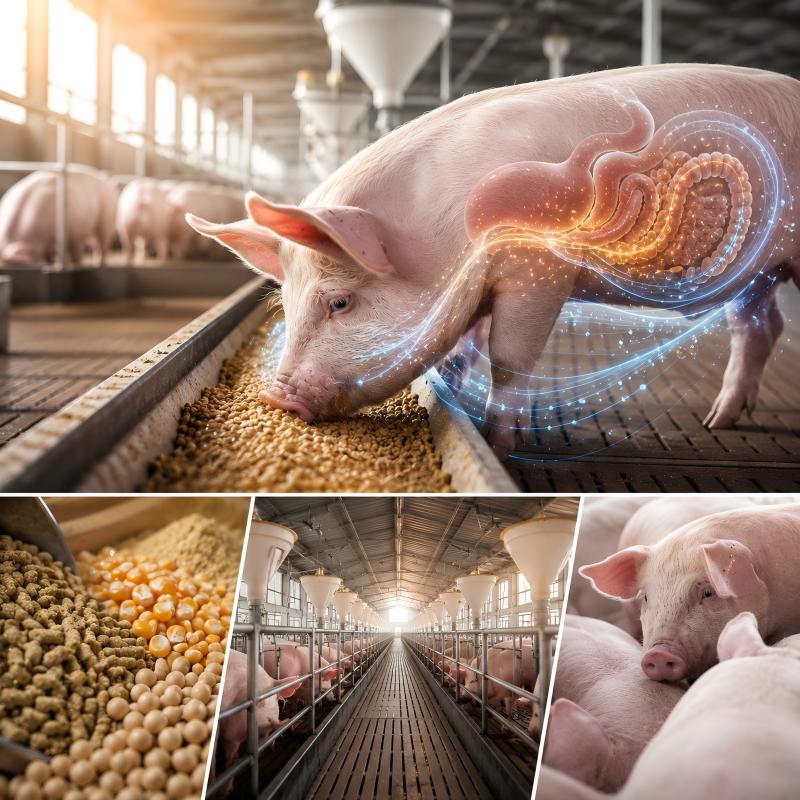
- Yeast culture for grower-finisher pigs helps support nutrient utilization, digestive consistency, and more predictable finishing performance.
- Maintaining fermentation continuity may contribute to reduced production fluctuation across large-scale swine systems.
- Industrial-grade yeast culture products remain stable under commercial pelleting conditions of approximately 85–90°C.
Introduction
In modern finishing operations, profitability depends on consistency as much as growth.
For commercial producers, three issues directly affect finishing margins:
- Rising feed costs
- Growth variability between groups
- Heat stress and inconsistent intake
Even small fluctuations in feed conversion or finishing weight can create significant economic loss across large production systems.
This is why many feeding programs now focus on improving feed efficiency, stable nutrient utilization, and fermentation continuity throughout the finishing cycle.
Unlike early-stage feeding programs focused on post-weaning adaptation, grower-finisher operations prioritize operational consistency and predictable finishing performance. Producers evaluating broader fermentation-focused feeding strategies can also explore how fermentation continuity supports commercial swine efficiency in our Yeast Culture for Swine guide.
Why Feed Efficiency Matters in Grower-Finisher Pig Production
Feed cost typically represents the largest expense in commercial swine production. As a result, even modest improvements in feed conversion ratio (FCR) may create substantial economic impact across large finishing operations.
Poor feed efficiency may lead to:
- Higher feed cost per kilogram of gain
- Greater production variability
- Uneven finishing weights
- Reduced profitability across marketing groups
For large-scale producers, the goal is not simply maximizing short-term growth. Stable nutrient utilization and predictable finishing performance are equally important for maintaining operational efficiency and reducing production fluctuation.
In commercial finishing systems, consistency often creates more economic value than isolated peak performance.
How Yeast Culture Supports Feed Efficiency in Grower-Finisher Pigs
1. Stabilize the Digestive Environment
Digestive fluctuation can reduce feeding predictability in commercial finishing systems, particularly during ingredient shifts, environmental stress, or seasonal temperature changes.
Yeast culture for grower-finisher pigs provides fermentation-derived metabolites, peptides, enzymes, and organic compounds that help support a more stable digestive environment.
This may contribute to:
- More stable digestion
- Better microbial balance
- Improved feeding consistency
- Reduced digestive fluctuation
Products such as Enzyme PLUS – Swine Use are increasingly integrated into commercial swine feeding programs designed to support digestive stability and more consistent nutrient utilization under practical production conditions.
2. Maximize Nutrient Utilization
Modern finishing diets are designed to improve nutrient extraction efficiency while maintaining stable animal performance.
Supporting digestive consistency may help improve:
- Feed utilization efficiency
- Nutrient absorption consistency
- Feed conversion stability
- Overall feeding predictability
Field nutrition observations suggest that maintaining stable digestive activity may contribute to more consistent finishing performance throughout commercial production cycles.
3. Normalize Growth Consistency Across Production Groups
Large-scale finishing operations increasingly prioritize production consistency rather than isolated peak performance.
Compared with starter pig nutrition programs focused on early adaptation, grower-finisher feeding strategies place greater emphasis on uniformity, predictable growth curves, and operational stability. Producers managing post-weaning feeding programs can also explore our Yeast Culture for Piglets guide for early-stage digestive support strategies.
Stable feeding performance may help support:
- More uniform finishing weights
- Reduced growth fluctuation
- Improved batch consistency
- More predictable market readiness
This becomes especially important during periods of environmental stress or seasonal heat pressure.
Problem → Mechanism → Outcome
| Problem | Mechanism | Outcome |
|---|---|---|
| Poor feed conversion | Supports stable nutrient utilization | Improved feed efficiency |
| Growth variability between groups | Supports fermentation continuity | More predictable finishing performance |
| Heat stress and inconsistent intake | Helps maintain feeding stability | Reduced production fluctuation |
Heat Stress and Performance Stability in Finishing Pigs
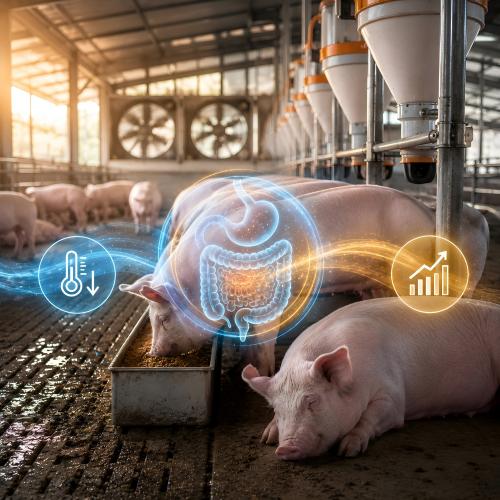
Heat stress remains one of the most significant production challenges in grower-finisher pig systems, particularly in regions with extended summer periods or high barn density.
As finishing pigs increase body weight, heat generation also increases, making larger animals more vulnerable to inconsistent intake and reduced feeding performance during hot conditions.
Under heat stress, commercial operations commonly experience:
- Lower feed intake
- Reduced feeding consistency
- Greater weight variation
- Less predictable finishing performance
Inconsistent finishing weights may also increase sorting pressure and reduce overall production efficiency during marketing and slaughter scheduling.
For this reason, many commercial feeding programs now focus on maintaining stable digestion and fermentation continuity during environmental stress periods. In modern swine solutions designed for large-scale production systems, reducing variability is often just as important as improving peak performance.
Why Pelleting Stability Matters in Commercial Swine Feed
Commercial feed manufacturing commonly involves pelleting temperatures of approximately 85–90°C. Under these conditions, ingredient stability becomes increasingly important for maintaining reliable feed performance.
In some regions, feed mills operate under inconsistent temperature control or high-intensity pelleting conditions, which may reduce the effectiveness of temperature-sensitive biological additives.
Compared with highly sensitive live microbial products, yeast culture products containing fermentation metabolites are often considered more compatible with commercial feed manufacturing environments.
Strong pelleting stability helps support:
- Reliable ingredient functionality
- Better batch consistency
- Stable shelf-life performance
- More predictable mixing uniformity
- Improved manufacturing reliability
In large-scale swine production systems, manufacturing consistency is closely connected to feeding consistency at the farm level.
Yeast Culture vs Probiotics in Commercial Finishing Diets
Although yeast culture and probiotics are both used in swine nutrition, their industrial functionality in large-scale finishing systems is different.
| Feature | Yeast Culture | Probiotics |
|---|---|---|
| Main Focus | Fermentation continuity and nutrient utilization | Live microbial delivery |
| Stability During Large-Scale Mixing | Strong | More variable |
| Shelf-Life Stability | More stable | More temperature-sensitive |
| Pelleting Compatibility | Strong | Depends on live viability |
| Manufacturing Reliability | High | Variable under processing stress |
| Commercial Feeding Objective | Production consistency | Microbial supplementation |
In commercial finishing systems, yeast culture is often selected because it combines digestive support with stronger industrial compatibility under practical feed manufacturing conditions.
FAQ
Can yeast culture improve feed efficiency in finishing pigs?
Field nutrition reports suggest yeast culture supplementation may help support more stable nutrient utilization and feed conversion consistency in commercial grower-finisher feeding programs.
Is yeast culture suitable for commercial pelleted feed?
Yes. Industrial-grade yeast culture products designed for commercial feed manufacturing are commonly used under pelleting temperatures of approximately 85–90°C.
Can yeast culture help reduce production variability?
Many commercial feeding programs use yeast culture to support digestive consistency and fermentation continuity, which may contribute to more predictable finishing performance across production groups.
Executive Takeaway: The Consistency Advantage
For modern grower-finisher operations, the goal is clear: maximize nutrient utilization while minimizing production fluctuation.
Integrating yeast culture for grower-finisher pigs into commercial feeding programs is not simply a nutritional adjustment — it is increasingly viewed as part of a broader operational consistency strategy.
By supporting digestive stability, nutrient utilization, and fermentation continuity, yeast culture supplementation may help contribute to:
- More stable feed efficiency
- More uniform finishing groups
- Better production predictability
- Improved manufacturing reliability under commercial feed processing conditions
As production margins continue tightening, many large-scale swine operations are increasingly prioritizing feeding strategies designed to improve consistency, reduce fluctuation, and support more predictable finishing performance throughout the production cycle.
Producers seeking more stable finishing performance and practical commercial feeding strategies can further explore our Swine Solutions resources for large-scale swine nutrition management.