
Key Insights
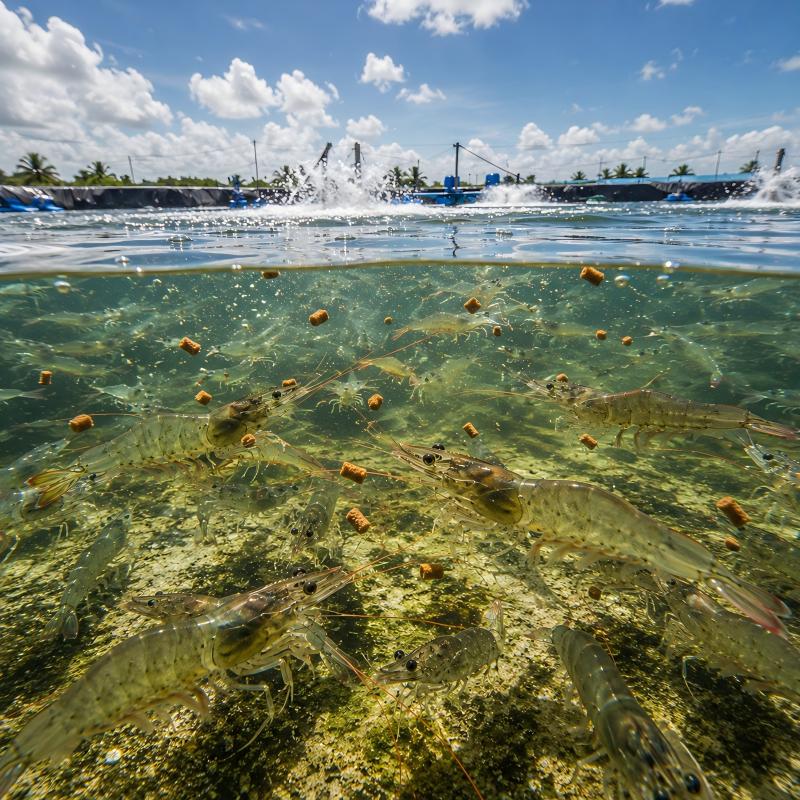
Modern shrimp farming systems operate under increasing biological and environmental pressure. High stocking densities, fluctuating water quality, alternative feed ingredients, and disease challenges continuously influence digestive performance.
In intensive aquaculture, gut health is no longer simply a nutritional consideration. It directly affects feed utilization, production consistency, and economic efficiency.
- Digestive stability is a critical production factor in modern shrimp farming.
- The shrimp midgut and hepatopancreas are primary targets for nutritional support strategies.
- Environmental stress often disrupts digestive function before visible production losses occur.
- Fermentation-derived nutritional ingredients are increasingly used to support microbial continuity and digestive resilience in intensive systems.
Why Gut Health Has Become a Major Challenge in Modern Shrimp Farming
Shrimp production has evolved rapidly over the past decade.
Modern operations increasingly rely on:
- Higher stocking densities
- Greater feeding intensity
- Reduced water exchange
- Alternative protein ingredients
- Higher biomass production targets
While these systems improve output, they also reduce biological tolerance to stress.
Even moderate fluctuations in temperature, dissolved oxygen, salinity, or ammonia can alter feeding activity and digestive performance. As production intensity increases, the digestive system becomes one of the first biological systems affected by environmental instability.
This is why gut health has become a central management objective in intensive shrimp production.
What Defines Gut Health in Shrimp Production?
In shrimp farming, gut health is not simply the absence of disease. It is the ability of the digestive system to maintain functional stability under continuously changing production conditions.
1. Gut and Hepatopancreas Integrity
The structural continuity of the midgut epithelium and the integrity of the hepatopancreas—the primary organ responsible for digestive enzyme synthesis, nutrient storage, and metabolic regulation—form the foundation of digestive resilience.
Healthy digestive tissues help maintain normal nutrient absorption while supporting the natural protective barriers that separate external environmental challenges from internal physiological processes.
2. Digestive and Enzymatic Function
Efficient digestion relies on the coordinated secretion of endogenous proteases, lipases, and amylases produced within the hepatopancreas.
Maintaining stable enzyme activity allows shrimp to efficiently break down dietary proteins, lipids, and carbohydrates before nutrients pass through the relatively simple digestive tract characteristic of crustaceans.
3. Microbial Stability
A stable digestive ecosystem is characterized by the dominance of beneficial indigenous microbial populations that help maintain ecological balance within the digestive environment.
Microbial continuity becomes increasingly important under high-density production conditions where environmental pressure is continuously present.
4. Nutrient Utilization
Nutrient utilization reflects the efficiency with which dietary nutrients are converted into growth, maintenance, and productive biomass.
When digestive efficiency declines, feed conversion often becomes less predictable, directly affecting production economics.
Major Factors That Disrupt Gut Stability in Intensive Systems
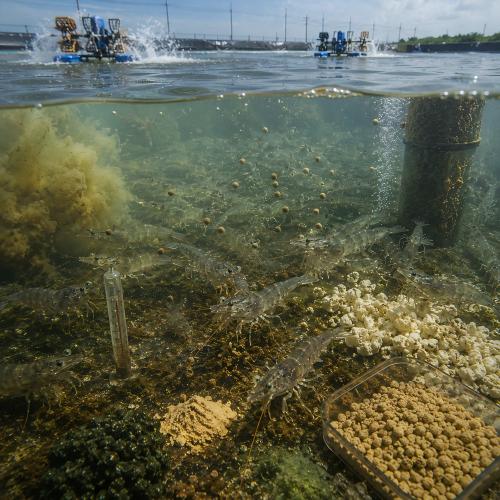
Multiple stressors can simultaneously influence digestive stability in commercial shrimp production.
Shrimp Gut Stress Matrix
| Production Challenge | Biological Impact | Potential Production Consequence |
|---|---|---|
| High Stocking Density | Increased physiological pressure on digestive processes | Reduced feeding consistency and digestive stability |
| Water Quality Fluctuation | Disturbed midgut environment and metabolic stress | Less efficient nutrient utilization |
| Alternative Protein Diets | Altered microbial continuity and digestive adaptation | Increased digestive variability |
| Environmental and Disease Pressure | Elevated metabolic demand | Reduced production consistency |
Unlike traditional extensive ponds, intensive systems provide limited biological buffering capacity. Small disturbances can therefore generate disproportionately large production consequences.
The Relationship Between Gut Stability and Feed Efficiency
Feed efficiency is often viewed primarily as a feed formulation issue.
In reality, digestive stability determines how effectively nutrients are utilized after feed consumption.
The production chain is straightforward:
Digestive Stability → Nutrient Utilization → Feed Efficiency → Production Economics
When the digestive system remains stable, nutrients are more consistently transformed into productive biomass.
When digestive instability occurs, nutrient utilization becomes less efficient, feed conversion becomes less predictable, and production variability increases.
For this reason, many modern shrimp nutrition programs focus on maintaining biological stability rather than simply increasing nutrient concentrations in the diet.
How Fermentation-Derived Nutrients Support Digestive Stability
Fermentation-derived nutritional ingredients are increasingly incorporated into shrimp diets because they interact with multiple components of the digestive ecosystem.
Rather than functioning as live microorganisms, these ingredients provide a complex matrix of metabolites, nucleotides, small peptides, organic acids, and other bioactive compounds generated during controlled fermentation.
1. Supporting Microbial Continuity
Fermentation-derived compounds contribute to maintaining a stable digestive environment, particularly during periods of dietary transition or environmental stress.
2. Supporting Midgut and Hepatopancreas Function
The shrimp midgut and hepatopancreas experience continuous physiological pressure under intensive production conditions.
Fermentation-derived nucleotides and small peptides provide readily available nutritional substrates that can be utilized with lower digestive processing requirements, helping support tissue maintenance and metabolic activity.
3. Enhancing Nutrient Transformation
Many fermentation metabolites participate in biological processes associated with nutrient utilization and digestive efficiency.
The composition of these fermentation-derived metabolites is heavily influenced by manufacturing conditions, which is why fermentation control remains a critical factor in product consistency.
4. Supporting Adaptive Responses to Environmental Stress
Under fluctuating water quality conditions, nutritional strategies that support biological continuity can contribute to maintaining more consistent digestive performance.
Why Gut Stability Matters More Under Intensive Farming Conditions
Traditional low-density ponds possess a natural ecological buffering capacity.
When nutritional or environmental challenges occur, shrimp can partially compensate through natural food availability and lower overall production pressure.
Intensive systems operate differently.
Whether using biofloc technologies, lined ponds, or recirculating aquaculture systems (RAS), production efficiency is achieved by increasing biomass density and reducing variability.
As a result, the margin for error becomes significantly smaller.
Intensive Farming Stability Chain
| Production Change | Biological Response | Farm-Level Impact |
|---|---|---|
| Temperature Fluctuation | Reduced feeding activity | Lower nutrient intake |
| Ammonia Accumulation | Increased physiological stress | Reduced digestive efficiency |
| Feed Ingredient Variability | Microbial disruption | Inconsistent performance |
| Digestive Instability | Reduced nutrient utilization | Higher FCR and production losses |
In intensive production systems, even moderate environmental fluctuations can rapidly alter feeding behavior, digestive activity, and metabolic efficiency.
Because stocking density is high and biological buffering capacity is limited, small disturbances often generate disproportionately large production consequences.
Under these conditions, digestive stability is not simply a performance enhancer—it becomes a foundational requirement for maintaining production resilience.
Practical Strategies for Supporting Shrimp Gut Health
Maintaining digestive stability requires a comprehensive management approach rather than a single intervention.
1. Optimize Feed Quality
Consistent ingredient quality and stable feed manufacturing processes help reduce nutritional variability.
2. Maintain Water Quality
Controlling temperature, oxygen, salinity, and ammonia remains essential for supporting digestive performance.
3. Minimize Abrupt Dietary Changes
Sudden feed formulation changes can disrupt digestive adaptation and microbial continuity.
4. Utilize Fermentation-Based Nutritional Strategies
Many producers incorporate yeast culture for aquaculture into broader nutrition programs designed to support digestive stability, nutrient utilization, and production consistency under intensive farming conditions.
Conclusion
As shrimp farming continues to intensify, digestive stability has emerged as one of the most important determinants of production success.
Gut and hepatopancreas integrity, digestive enzyme function, microbial stability, and nutrient utilization are closely interconnected and collectively influence how effectively shrimp respond to environmental and nutritional challenges.
For modern aquaculture operations, supporting digestive-hepatopancreatic stability is no longer simply a nutritional objective. It is a practical strategy for maintaining feed efficiency, production consistency, and long-term farm resilience.