
Key Insights
Modern aquaculture systems operate under increasing pressure from feed cost volatility, environmental fluctuations, disease challenges, and the growing use of alternative protein sources. As production intensity rises, maintaining digestive stability and production consistency has become a key objective for nutritionists and feed manufacturers.
Yeast culture for aquaculture is a fermentation-derived nutritional solution that delivers functional metabolites capable of supporting microbial continuity, digestive efficiency, and resilience under changing production conditions.
Key areas of application include:
- Supporting digestive stability in shrimp and fish production
- Improving nutrient utilization efficiency
- Enhancing resilience to environmental stress
- Maintaining microbial ecosystem balance
- Supporting production consistency under intensive farming conditions
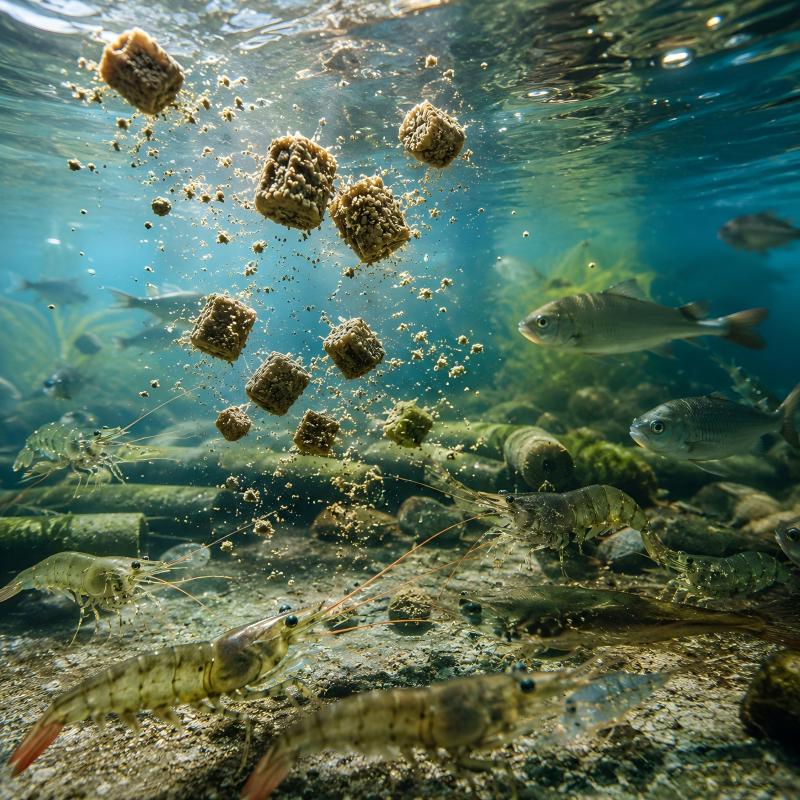
Why Aquaculture Producers Are Looking Beyond Traditional Feed Additives
Modern aquaculture has evolved far beyond simply maximizing growth rates. Today, producers must manage a combination of nutritional, environmental, and operational challenges that directly influence performance and profitability.
Common production pressures include:
- Water quality fluctuations
- Alternative protein inclusion
- Environmental stress events
- High stocking densities
- Feed ingredient variability
- Reduced antibiotic dependence
As a result, many nutrition programs now focus on maintaining biological stability rather than relying solely on growth-promoting approaches.
This shift has increased interest in fermentation-based feed additives that support digestive function, microbial continuity, and production resilience.
What Is Yeast Culture and How Does It Work in Aquaculture?
Yeast culture is a fermentation-derived ingredient containing metabolites, peptides, organic compounds, and fermentation by-products generated during controlled microbial fermentation.
Unlike live microbial products that rely on survival after feed processing, yeast culture delivers a complex matrix of functional metabolites directly to the digestive environment.
These fermentation-derived compounds function through multiple biological pathways:
- Support microbial continuity during dietary and environmental transitions, helping maintain a stable gastrointestinal ecosystem.
- Enhance digestive enzyme activity and nutrient transformation processes, improving nutrient utilization efficiency.
- Reinforce intestinal structural integrity during production stress, supporting digestive resilience under intensive farming conditions.
- Contribute to cellular adaptation mechanisms that help aquatic animals respond to environmental fluctuations.
For producers seeking a deeper understanding of how fermentation conditions influence metabolite composition, our article on how fermentation parameters affect metabolite composition in yeast culture explores the relationship between fermentation control and functional product quality.
Key Challenges in Modern Aquaculture Production
1. Digestive Instability
Intensive production systems often expose aquatic animals to dietary changes, environmental stressors, and fluctuating feed quality, placing continuous pressure on digestive function.
2. Environmental Fluctuations
Temperature shifts, dissolved oxygen variation, salinity changes, and ammonia accumulation can influence nutrient utilization and overall production performance.
3. Feed Ingredient Variability
As fishmeal inclusion decreases and alternative protein sources become more common, nutritional consistency has become increasingly difficult to maintain.
4. Disease and Production Pressure
Modern aquaculture systems require nutritional strategies that support resilience and continuity under ongoing microbial and environmental challenges.
Aquaculture Stress & Dynamic Buffering
| Production Challenge | Functional Mechanism | Aquaculture-Relevant Outcome |
|---|---|---|
| Nutrient Leaching From Pellets | Fermentation metabolites remain associated with feed matrices during water exposure | Improved delivery of functional nutrients before pellet breakdown and reduced nutrient loss into the water column |
| Water Quality Fluctuation | Supports cellular adaptation pathways under environmental pressure | Greater digestive stability during temperature, salinity, and ammonia fluctuations |
| High Plant Protein Inclusion | Supports microbial continuity and digestive enzyme activity | Improved adaptation to alternative protein programs and maintenance of intestinal integrity |
| Intensive Production Pressure | Functional fermentation metabolites support microbial ecosystem balance | More consistent feed utilization under high-density farming conditions |
Potential Benefits of Yeast Culture in Aquaculture Systems
1. Supporting Digestive Stability
A stable digestive environment allows aquatic animals to utilize nutrients more efficiently while maintaining performance under changing production conditions.
2. Promoting Microbial Balance
Fermentation-derived metabolites contribute to microbial ecosystem continuity, particularly during feed transitions and periods of environmental stress.
3. Improving Feed Efficiency
Enhanced nutrient utilization supports more effective feed conversion and greater consistency across production cycles.
4. Supporting Stress Resilience
Nutritional strategies that strengthen biological stability help animals maintain performance during environmental and operational challenges.
Applications Across Different Aquaculture Species
1. Shrimp Farming
In shrimp production, yeast culture is commonly incorporated into feeding programs focused on digestive stability, microbial balance, and production consistency.
2. Tilapia Production
Tilapia operations often utilize fermentation-derived ingredients to support nutrient utilization and adaptation to intensive production systems.
3. Marine Fish Systems
Marine fish production frequently encounters environmental variability, making digestive resilience and microbial continuity increasingly important.
4. Recirculating Aquaculture Systems (RAS)
Highly controlled RAS environments depend heavily on biological stability and predictable nutritional performance.
Why Processing Stability Matters in Aquaculture Feed Manufacturing
Unlike livestock feeds, aquaculture feeds may remain immersed before consumption. Maintaining functional nutrient delivery during water exposure is therefore a critical consideration for feed manufacturers.
The ability of fermentation-derived metabolites to remain associated with feed matrices during water exposure helps reduce premature nutrient loss and supports more effective nutrient delivery to the animal.
Processing stability is equally important during feed production.
Unlike live microbial products that may experience viability losses during high-temperature processing, yeast culture is based on a matrix of fermentation-derived metabolites that remain functionally stable throughout commercial feed manufacturing operations.
This characteristic makes yeast culture particularly suitable for aquaculture feeds produced through pelleting and extrusion processes, where ingredients are routinely exposed to elevated temperatures, moisture, and mechanical shear forces.
As a result, nutritionists can focus on delivering fermentation-derived functionality to the animal rather than managing microbial survival during feed processing.
Feed manufacturers evaluating ingredient performance under changing production conditions often examine how yeast culture stabilizes feed variability as part of broader strategies designed to improve nutritional consistency and production predictability.
Choosing a Fermentation-Based Additive for Aquaculture
When evaluating aquaculture feed additives, buyers should look beyond basic specifications and consider factors that directly influence field performance.
1. Fermentation Quality
Consistent fermentation processes generally produce more predictable metabolite profiles.
2. Processing Stability
Ingredients should maintain functional integrity throughout pelleting, extrusion, storage, and feed delivery.
3. Product Consistency
Reliable batch-to-batch consistency is essential for long-term feeding programs.
4. Technical Support
Manufacturing expertise, quality control systems, and application guidance all contribute to successful implementation.
Conclusion
As aquaculture production becomes increasingly intensive, maintaining digestive stability, microbial balance, and production consistency has become a central nutritional objective.
Yeast culture for aquaculture provides a fermentation-based approach that supports nutrient utilization, stress resilience, and biological continuity across shrimp, fish, and modern aquaculture systems.
For producers seeking greater consistency under changing production conditions, fermentation-derived nutritional strategies are becoming an increasingly important component of modern aquaculture nutrition.