
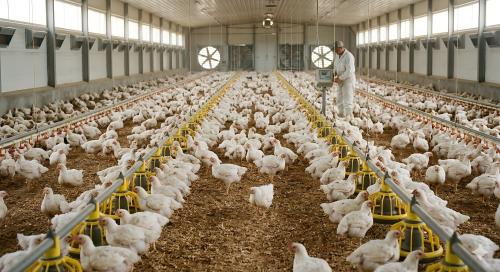
Modern poultry production continues moving toward high-density poultry production in order to improve housing efficiency and production output. However, intensive broiler farming also creates greater nutritional and environmental pressure on the flock.
Under high-density conditions, poultry producers commonly face challenges such as:
- Heat stress
- Wet litter
- Feed intake inconsistency
- Intestinal balance disruption
- Increased microbial pressure
- Reduced feed efficiency
- Higher ammonia levels inside poultry houses
These pressures become even more difficult to manage in AGP-free poultry production systems, where maintaining intestinal stability without routine antibiotic support is increasingly important.
As a result, nutritional strategies that support gut stability and digestive consistency have become a major focus in commercial poultry farming.
Yeast culture is widely used as a functional nutritional solution in modern poultry production because it helps support intestinal balance, feed utilization, litter quality, and stress adaptation under intensive farming conditions.
For producers managing gut health, feed efficiency, and environmental pressure in intensive farming systems, our Poultry Solutions page provides additional nutritional application strategies for commercial poultry production.
Why High-Density Poultry Production Creates Nutritional Challenges
High-density poultry production increases environmental and physiological stress on broilers throughout the production cycle.
In modern commercial broiler houses, higher bird density often leads to:
- Greater microbial exposure
- Higher litter moisture
- Increased heat accumulation
- Stronger competition for feed and water
- More unstable digestive conditions
Even when feed formulation is optimized, intestinal performance can still become inconsistent under stocking pressure.
This is especially common during:
- Summer heat stress periods
- Rapid growth stages
- AGP-reduction programs
- Poor litter conditions
- Ventilation fluctuations
When gut stability declines, producers may observe:
- Lower feed efficiency
- Uneven body weight
- Wet litter problems
- Increased ammonia pressure
- Reduced flock uniformity
In high-density systems, maintaining digestive consistency becomes just as important as maximizing growth rate.
How Yeast Culture Supports Gut Stability in Intensive Poultry Systems
Yeast culture contains fermentation metabolites, yeast cell wall components, peptides, organic compounds, and bioactive nutrients produced during controlled fermentation.
Unlike direct-feed antibiotics, yeast culture works as a nutritional support tool that helps maintain a more stable intestinal environment.
Its role becomes especially important in intensive poultry systems where birds are continuously exposed to environmental and microbial stress.
Microbial Balance Under Stocking Stress
High stocking density increases microbial pressure inside the poultry house.
Under these conditions, maintaining balanced intestinal microflora becomes more difficult, particularly in AGP-free poultry production systems.
Yeast culture may help support beneficial microbial populations inside the digestive tract through fermentation-derived compounds and yeast cell wall fractions such as mannan oligosaccharides (MOS).
This makes yeast culture a useful component in nutritional strategies designed to support AGP-free poultry production rather than replace antibiotics directly.
Common industry applications include:
- Reduced-antibiotic feeding programs
- AGP-free broiler production
- Gut stability support during stress periods
- Nutritional support under microbial challenge
Maintaining Feed Intake Consistency
Feed intake often becomes unstable during heat stress or under crowded production conditions.
Digestive discomfort, environmental pressure, and fluctuating gut conditions can negatively affect nutrient consumption and performance consistency.
Yeast culture is commonly used to help support digestive stability during these stress periods, especially in hot-climate poultry regions such as the Middle East and North Africa where heat stress can significantly reduce broiler performance.
Supporting Nutrient Absorption Efficiency
A stable digestive environment supports better nutrient utilization.
When intestinal balance is maintained more effectively, broilers are generally better able to utilize dietary nutrients consistently throughout the production cycle.
This becomes increasingly important in high-density systems where even small reductions in feed efficiency can significantly affect production cost.
To further support digestive efficiency under intensive production conditions, many commercial producers combine yeast culture with Enzyme PLUS – Poultry Use nutritional solutions.
Operational Challenges and the Role of Yeast Culture
| Production Challenge | Role of Yeast Culture | Operational Impact |
|---|---|---|
| Microbial imbalance under stocking stress | Supports beneficial intestinal microflora | More stable flock performance |
| Reduced feed intake during heat stress | Helps maintain digestive stability | Improved feed efficiency consistency |
| Wet litter and ammonia pressure | Improves nutrient utilization | Better litter condition management |
| AGP reduction pressure | Supports gut resilience naturally | Easier transition to AGP-free production |
Effects of Yeast Culture on Feed Efficiency and Growth Performance
In high-density poultry farming, feed conversion ratio (FCR) becomes highly sensitive to intestinal stability and environmental stress.
Even small digestive disruptions can lead to measurable economic losses in commercial broiler operations.
Yeast culture is commonly included in poultry nutrition programs to help support:
- Feed efficiency
- Digestive consistency
- Nutrient absorption
- Flock uniformity
- Growth stability during stress periods
Rather than functioning as a rapid growth promoter, yeast culture is generally positioned as a long-term nutritional management tool that supports production consistency.
Commercial Performance Observations in High-Density Broiler Production
Commercial poultry operations and field observations commonly report performance improvements when yeast culture is included in high-density feeding programs.
Typical industry-observed results may include:
| Performance Indicator | Common Observation |
|---|---|
| Feed conversion ratio (FCR) | Improvement of 2–5 points |
| Feed intake consistency | More stable during heat stress |
| Litter condition | Reduced wet litter incidence |
| Body weight uniformity | Improved flock consistency |
| Digestive stability | Better tolerance to environmental stress |
In commercial practice, the value of these improvements becomes more significant as stocking density increases.
Supporting Litter Quality and Poultry House Environment
Digestive efficiency directly affects manure consistency and litter quality.
When nutrients are not properly utilized, more undigested material passes into the litter, contributing to:
- Higher litter moisture
- Increased ammonia release
- Poor air quality
- Greater paw health problems
In European poultry production systems, litter management and ammonia reduction have become increasingly important due to both animal welfare expectations and environmental pressure.
Wet Litter Challenges in Dense Broiler Houses
Wet litter is one of the most common operational problems in high-density poultry farming.
Poor litter conditions may contribute to:
- Footpad dermatitis
- Higher microbial activity
- Respiratory discomfort
- Reduced housing quality
By helping support digestive consistency and nutrient utilization, yeast culture may contribute to more manageable litter conditions in intensive poultry operations.
Gut Health and Environmental Management Connection
Modern poultry production increasingly recognizes that intestinal health and environmental management are closely connected.
A more stable digestive system can help producers maintain:
- Better litter condition
- More stable house environment
- Lower ammonia pressure
- Improved flock comfort
These factors become increasingly valuable in large-scale commercial poultry systems.
Yeast Culture During Heat Stress and Environmental Pressure
Heat stress remains one of the biggest challenges in intensive poultry farming.
Under high environmental temperatures, broilers commonly experience:
- Reduced feed intake
- Higher water consumption
- Intestinal permeability stress
- Lower nutrient utilization
- Increased production variability
In high-density houses, heat accumulation further amplifies these challenges.
Yeast culture is frequently used as part of summer feeding strategies because maintaining digestive stability during thermal stress is essential for flock consistency.
In hot-climate production regions, nutritional support for gut resilience becomes particularly important during:
- Summer production cycles
- Ventilation stress
- Seasonal temperature fluctuations
- Long transportation periods
Where Yeast Culture Fits in Modern Poultry Nutrition Programs
Modern poultry nutrition programs rarely rely on a single additive solution.
Instead, producers increasingly use integrated nutritional strategies designed to support digestive efficiency, intestinal stability, and production consistency.
Yeast culture is commonly combined with:
- NSP enzymes
- Probiotics
- Organic acids
- Balanced amino acid programs
- Precision feed formulation
Synergistic Use with NSP Enzymes
In high-density poultry production, viscous diets and incomplete digestion can place additional pressure on intestinal health.
NSP enzymes help improve nutrient release and reduce anti-nutritional effects in feed ingredients, while yeast culture helps support microbial balance and digestive stability.
This combination is often used in commercial poultry nutrition programs to improve feed utilization under intensive farming conditions.
Choosing a Yeast Culture Product for Intensive Poultry Farming
Not all yeast culture products deliver the same consistency in commercial poultry production.
The effectiveness of a yeast culture product depends heavily on:
- Fermentation process stability
- Metabolite consistency
- Raw material quality
- Species-specific formulation
- Production quality control
For large-scale poultry operations, supply consistency and technical support are also important selection factors.
Producers often prefer suppliers capable of providing:
- Stable production quality
- Technical formulation support
- Application guidance
- Consistent supply capacity
Conclusion
High-density poultry production places significant pressure on digestive stability, environmental management, and flock consistency.
As AGP-free poultry production continues expanding globally, maintaining intestinal resilience through nutritional management becomes increasingly important.
Yeast culture is widely used in intensive poultry systems because it helps support:
- Gut stability
- Feed efficiency consistency
- Litter quality
- Heat stress adaptation
- Production stability under stocking pressure
Rather than acting as a short-term growth stimulant, yeast culture functions as part of a long-term nutritional strategy designed to support sustainable and efficient poultry production under modern commercial farming conditions.
For poultry producers seeking nutritional strategies for AGP-free production, gut stability, and feed efficiency under high-density farming conditions, explore our Saccharomyces cerevisiae Culture for additional technical and application information.