
Introduction
In the feed additive industry, many buyers assume that yeast culture performance is determined mainly by the strain. However, in real-world applications, products with the same strain often deliver very different results.
The reason is simple:
Metabolite composition is not fixed—it is shaped by the fermentation process.
Fermentation parameters directly determine what metabolites are produced, in what quantity, and how stable they are across batches.
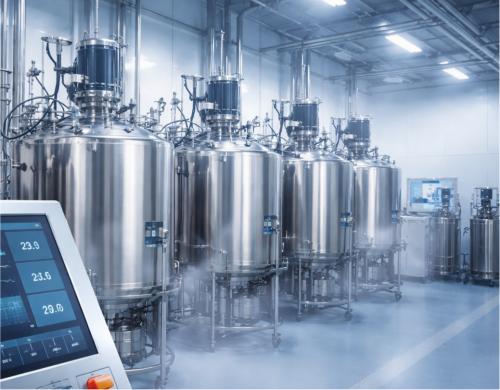
The Core Concept: Fermentation Shapes Function, Not Just Growth
Fermentation is often misunderstood as a process for increasing microbial biomass. In reality, it is a controlled metabolic process that determines the functional value of the final product.
To understand this, it helps to distinguish between two types of metabolites:
- Primary metabolites – related to microbial growth (e.g., amino acids, basic nutrients)
- Secondary metabolites – related to functional performance (e.g., organic acids, enzymes, peptides, immune-modulating compounds)
👉 In feed applications, secondary metabolites are what drive real performance outcomes such as digestion efficiency, gut stability, and feed conversion.
Key Fermentation Parameters That Influence Metabolite Composition
1. Temperature
Temperature directly affects enzyme activity and metabolic rates during fermentation.
- Higher temperatures accelerate metabolism but can lead to unstable or degraded metabolites
- Lower temperatures allow more controlled metabolic pathways, often resulting in more stable compositions
This is why products produced under poorly controlled temperature conditions may show inconsistent odor, activity, or performance.
2. pH Level
pH plays a critical role in regulating enzyme systems and microbial balance.
- Different pH levels activate different metabolic pathways
- Small fluctuations can shift production toward acids, peptides, or other compounds
Inconsistent pH control often leads to unpredictable metabolite profiles—and ultimately inconsistent animal responses.
3. Oxygen Availability
Oxygen determines whether yeast metabolism follows aerobic or anaerobic pathways.
- Higher oxygen levels typically promote biomass growth
- Limited or controlled oxygen conditions favor metabolite production
This is why advanced fermentation systems use controlled oxygen profiles rather than constant aeration, allowing more precise metabolite regulation.
4. Fermentation Time
Fermentation is a dynamic process with distinct stages:
- Early stage → microbial growth
- Mid stage → peak metabolite production
- Late stage → metabolite degradation or instability
Optimal harvest time is determined by peak metabolite concentration, not maximum biomass—because functional performance depends on metabolites, not cell count alone.
Over-fermentation is a common but overlooked cause of product instability.
5. Substrate Composition (Raw Materials)
The choice of raw materials defines the metabolic “inputs” available during fermentation.
- Carbon and nitrogen sources influence metabolite pathways
- Trace elements affect enzyme activity and yield
As discussed in our blog on raw material selection, ingredient quality directly impacts the final metabolite profile.
Why Inconsistent Fermentation Leads to Unstable Product Performance
When fermentation parameters are not tightly controlled, the result is:
- Batch-to-batch variation
- Fluctuating metabolite profiles
- Unpredictable animal performance
This explains why some yeast culture products deliver strong results in one batch—but fail to perform consistently over time.
How Advanced Fermentation Control Improves Consistency
Consistent metabolite composition requires more than just a good strain—it requires process control.
Key factors include:
- Precise temperature regulation
- Continuous pH monitoring
- Controlled oxygen supply
- Standardized fermentation timing
These controls ensure that each batch maintains a stable metabolite profile, which directly translates into predictable performance in feed applications.
What This Means for Feed Formulators and Buyers
Many buyers still evaluate yeast products based on outdated indicators. However, professional feed formulators focus on what truly drives performance:
| Traditional Buying Focus | Professional Buying Focus |
|---|---|
| CFU count | Metabolite consistency |
| Crude protein | Fermentation control |
| Price per kg | Batch-to-batch stability |
Instead of asking “How many cells?”, the better question is:
👉 “How stable is the metabolite composition?”
For more insights on stability, you may also read: How to Evaluate Fermentation Stability in Feed Additives.
You can also explore our Saccharomyces cerevisiae Culture solutions or check our Ruminant Solutions for practical applications.
Conclusion
Fermentation parameters are the hidden drivers behind yeast culture performance.
The real difference between suppliers is not the strain itself—but how fermentation is controlled to produce consistent, functional metabolites.
👉 In modern feed formulation, consistency is not optional—it is the foundation of performance.
Get Consistent Fermentation Performance
If you are looking for yeast culture products with stable metabolite profiles and reliable batch consistency, our team can support your formulation needs.
Contact us today to discuss technical details or request samples tailored to your application.