
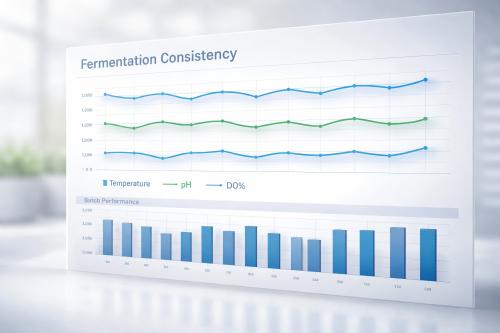
In feed production, consistency is not just a quality preference—it is a business requirement. Feed manufacturers and distributors rely on stable product performance to ensure predictable results in animal health, growth, and feed efficiency.
In practical applications, even small variations in batch consistency can lead to noticeable differences in feed efficiency and animal performance, especially in large-scale operations. When product performance varies from batch to batch, it creates uncertainty across the entire value chain.
This is why product reliability has become a key decision factor when selecting fermentation-based feed additives.
What Does “Consistent Fermentation” Really Mean?
Consistent fermentation refers to the ability to maintain stable production conditions and outputs across different batches. It is not only about producing a finished product, but ensuring that every batch delivers the same functional value.
In practical terms, this includes:
- Stable microbial activity
- Consistent levels of metabolites and enzymes
- Uniform batch-to-batch quality
For buyers, fermentation consistency translates directly into product consistency—one of the most important factors in long-term supplier evaluation.
How Fermentation Consistency Affects Product Performance
1. Stable Nutritional and Functional Components
Fermentation produces a range of beneficial compounds, including enzymes, peptides, and organic acids. When the process is stable, these components remain consistent in concentration and activity, ensuring predictable product performance.
2. Predictable Animal Response
Animals respond to feed additives based on the functional compounds they contain. When these compounds are stable, outcomes such as feed intake, digestion efficiency, and weight gain become more predictable.
3. Reduced Risk of Performance Fluctuation
Inconsistent fermentation can lead to noticeable fluctuations in product effectiveness. One batch may perform well, while another fails to deliver expected results. This variability increases operational risk and makes it difficult to maintain consistent feeding programs.
Inconsistent fermentation is often difficult to detect from basic product specifications alone, which is why evaluating production systems and quality control processes is critical when selecting a supplier.
Key Factors That Influence Fermentation Consistency
1. Raw Material Quality Control
The quality of raw materials directly affects fermentation outcomes. Variations in substrate composition can lead to unstable microbial growth and inconsistent metabolite production.
2. Strain Stability and Selection
Microbial strains must be carefully selected and maintained to ensure stable performance. Strong genetic stability is essential for reliable fermentation results.
3. Process Control
Fermentation is highly sensitive to environmental conditions such as temperature, pH, and oxygen levels. Precise control of these parameters is critical to maintaining production consistency.
4. Quality Monitoring and Testing
Advanced quality control systems help detect variations early and ensure that each batch meets defined standards.
Risks of Inconsistent Fermentation
When fermentation consistency is not properly controlled, several risks can arise:
- Unstable product performance
- Increased customer complaints and returns
- Difficulty maintaining brand reputation
- Hidden costs due to inconsistent results
For distributors and feed manufacturers, these risks can outweigh any short-term cost advantages from lower-priced suppliers.
How to Evaluate a Supplier’s Fermentation Consistency
Not all fermentation-based products deliver the same level of consistency. When evaluating suppliers, it is important to look beyond basic specifications and assess their ability to maintain stable production over time.
- Availability of batch-level production data to verify consistency
- Standardized fermentation process with controlled parameters
- In-house quality testing for microbial activity and key metabolites
- Ability to provide technical support based on real application scenarios
Suppliers with well-established fermentation systems and quality control processes are more likely to deliver stable, reliable products across different production batches.
For example, high-quality yeast culture products are typically produced under controlled fermentation systems to ensure consistent functionality.
Learn more about how microbial stability in fermentation affects product outcomes in our related article.
Conclusion
Consistent fermentation is the foundation of product reliability in feed additives. It ensures stable composition, predictable performance, and reduced operational risk.
For buyers who prioritize consistent fermentation and reliable batch performance, working with a supplier that can provide documented production control and stability data is essential. Contact our team to learn more about our fermentation process and quality standards.