
Introduction
Feed costs account for the largest share of livestock production expenses, and even small improvements in nutrient utilization can have a meaningful economic impact. In modern feeding systems, improving nutrient digestibility is not just a nutritional goal—it is directly linked to feed efficiency, animal performance, and overall profitability.
Yeast culture has been widely used in animal nutrition, yet many producers and formulators still ask a fundamental question: how exactly does it improve digestibility?
This article explains the scientific mechanisms behind how yeast culture enhances nutrient digestibility in livestock.
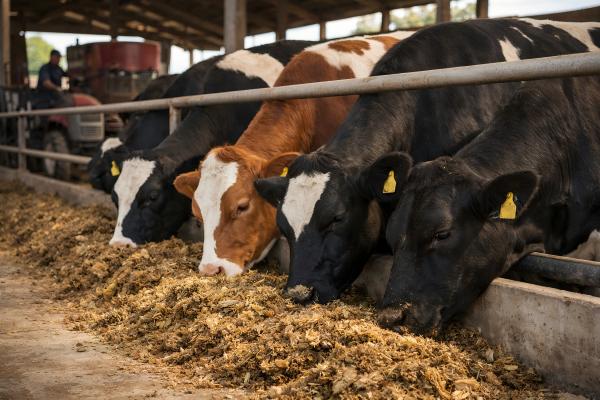
What Is Nutrient Digestibility in Animal Nutrition?
Nutrient digestibility refers to the proportion of feed nutrients that are broken down and absorbed by the animal. It is a critical factor in determining feed efficiency and overall production performance.
Digestibility is influenced by several factors, including:
-
Digestive enzyme activity
-
Gut microbiota composition
-
Gastrointestinal health and integrity
When digestibility is improved, animals can extract more energy and nutrients from the same amount of feed, reducing waste and improving efficiency.
What Is Yeast Culture?
Yeast culture is a product derived from the fermentation of Saccharomyces cerevisiae. Unlike live yeast, it does not primarily function through colonization. Instead, it contains a complex mixture of:
-
Fermentation metabolites
-
Peptides and amino acids
-
Cell wall components
These bioactive compounds interact with the animal’s digestive system and microbial ecosystem, leading to improved nutrient utilization.
Key Mechanisms: How Yeast Culture Improves Nutrient Digestibility
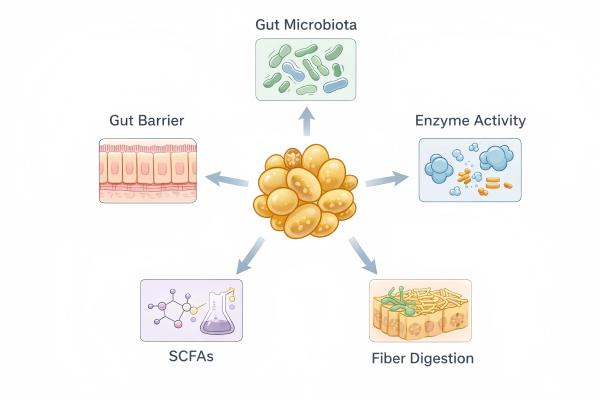
1. Modulation of Gut Microbiota
Yeast culture provides nutrients and growth factors that support beneficial microbial populations in the gut.
As beneficial bacteria increase, harmful microbes are suppressed, resulting in a more balanced microbial ecosystem. This improves the breakdown of feed components and enhances overall digestive efficiency.
2. Stimulation of Digestive Enzyme Activity
One of the most direct ways yeast culture improves digestibility is by enhancing digestive enzyme activity.
Studies and field observations show increased activity of:
-
Amylase (starch digestion)
-
Protease (protein digestion)
-
Cellulase (fiber degradation)
This leads to more efficient breakdown of nutrients before absorption.
3. Enhancement of Fiber Degradation (Especially in Ruminants)
In ruminants, fiber digestion is a key determinant of energy availability. Yeast culture supports rumen microbial activity, particularly fiber-degrading bacteria.
As a result:
-
Cellulose and hemicellulose breakdown improves
-
Fermentation efficiency increases
-
More usable energy is released from fibrous feed
This is especially important in high-forage diets.
👉 Explore more in our Ruminant (Dairy/Beef) Solutions
4. Production of Beneficial Metabolites (e.g., SCFAs)
Yeast culture promotes the production of short-chain fatty acids (SCFAs) through microbial fermentation.
SCFAs such as butyrate play key roles in:
-
Providing energy to intestinal cells
-
Supporting gut health
-
Enhancing nutrient absorption
These metabolites act as a bridge between microbial activity and host digestion.
5. Improvement of Gut Barrier Function
A healthy intestinal barrier is essential for efficient nutrient absorption.
Yeast culture helps:
-
Strengthen tight junctions between epithelial cells
-
Reduce intestinal permeability
-
Improve nutrient retention and absorption efficiency
👉 Related reading: how yeast culture supports intestinal barrier function
Does Yeast Culture Improve Nutrient Digestibility in All Livestock?
Yes, but the mechanisms and benefits vary across species.
Ruminants
-
Focus on fiber digestion and rumen stability
-
Improved energy extraction from forage
Poultry
-
Enhanced enzyme activity and gut health
-
Better nutrient absorption efficiency
Swine
-
Improved protein and energy utilization
-
More stable gut environment
Yeast Culture vs Probiotics: Impact on Digestibility
While both yeast culture and probiotics support digestion, they function in different ways.
| Aspect | Yeast Culture | Probiotics |
|---|---|---|
| Nature | Fermentation metabolites | Live microorganisms |
| Stability | High | Sensitive to heat and storage |
| Function | Indirect modulation of microbiota | Direct introduction of beneficial bacteria |
| Role in digestion | Enhances enzymes and microbial balance | Contributes additional microbes |
In practice, they are complementary rather than interchangeable.
Conclusion
Yeast culture improves nutrient digestibility through multiple interconnected mechanisms rather than a single mode of action. By modulating gut microbiota, stimulating enzyme activity, enhancing fiber degradation, promoting beneficial metabolites, and supporting intestinal integrity, it creates a more efficient digestive system.
This systemic improvement allows animals to utilize feed more effectively, making yeast culture a valuable tool in modern animal nutrition strategies.
For formulation guidance or product selection, you can contact us for technical support.
FAQ
Can yeast culture improve digestibility in all livestock species?
Yes. Yeast culture has been shown to improve digestibility in ruminants, poultry, and swine, although the specific mechanisms and benefits vary depending on the digestive system of each species.
How long does it take to see digestibility improvements?
Improvements in digestive function can begin within days as microbial activity changes, but measurable performance effects are typically observed over several weeks depending on diet and management conditions.
Can yeast culture replace digestive enzymes in feed?
No. Yeast culture does not replace enzymes directly. Instead, it enhances the animal’s natural digestive processes and supports microbial populations that contribute to enzyme production.