
Modern livestock production places animals under a variety of physiological stresses. Feed transitions, environmental pressure, high stocking density, and pathogen exposure can all affect gut health. When these challenges disrupt the intestinal barrier, animals may experience reduced nutrient absorption, higher disease risk, and lower production performance.
Maintaining a strong intestinal barrier has therefore become a key objective in animal nutrition. One nutritional strategy that has gained increasing attention is the use of yeast culture in feed. Yeast culture contains beneficial metabolites produced during fermentation, which can positively influence gut microbiota, immune responses, and intestinal integrity.
Understanding how yeast culture works in the animal gut environment also helps explain its role in maintaining intestinal stability and digestive function.
As a result, yeast culture is widely used to support gut health and maintain stable digestive function in poultry, swine, and ruminants.
What Is the Intestinal Barrier and Why Is It Important?
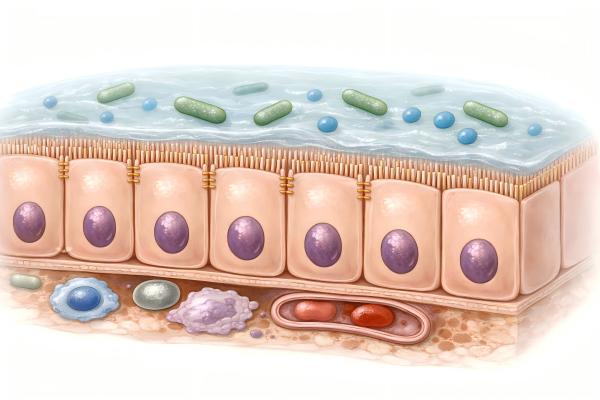
The intestinal barrier is a complex system that protects the body while allowing nutrients to be absorbed efficiently. It consists of several interacting components, including intestinal epithelial cells, tight junction proteins, gut microbiota, and immune cells located in the intestinal mucosa.
These elements work together to perform two essential functions. First, they allow digested nutrients to pass through the intestinal wall and enter the bloodstream. Second, they prevent harmful pathogens, toxins, and antigens from entering the body.
When the intestinal barrier becomes compromised, the condition is often described as increased intestinal permeability. This allows unwanted substances to pass through the intestinal lining, which may trigger inflammation, reduce digestive efficiency, and negatively affect overall animal performance.
For livestock producers, maintaining intestinal barrier integrity is therefore critical for improving feed efficiency, growth performance, and disease resistance.
How Yeast Culture Supports Intestinal Barrier Integrity
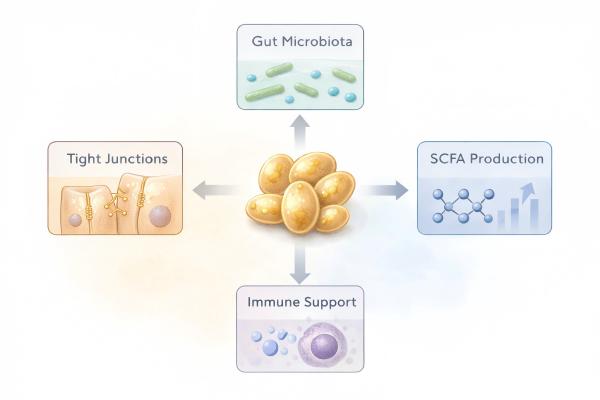
Yeast culture supports intestinal barrier function through multiple biological mechanisms. These mechanisms work together to improve microbial balance, enhance immune responses, and maintain intestinal tissue integrity.
Modulating Gut Microbiota Balance
One of the most important effects of yeast culture is its influence on gut microbial populations. During fermentation, yeast produces metabolites that can promote the growth of beneficial microorganisms while limiting the growth of certain pathogenic bacteria.
Beneficial bacteria such as Lactobacillus and Bifidobacterium play an essential role in maintaining intestinal stability. When these microbes thrive, they help create a balanced gut environment that supports digestion and protects the intestinal lining.
By encouraging a healthier microbial community, yeast culture contributes to a more stable intestinal ecosystem.
Enhancing Short-Chain Fatty Acid Production
Beneficial gut bacteria produce short-chain fatty acids (SCFAs) such as acetate, propionate, and butyrate during fermentation. These compounds provide an important energy source for intestinal epithelial cells and help maintain the structural integrity of the gut lining.
When yeast culture promotes the growth of beneficial microbes, SCFA production may increase. Higher SCFA availability supports intestinal cell renewal and helps maintain a strong and functional intestinal barrier.
Studies have also explored the relationship between yeast culture and short-chain fatty acid production, highlighting its importance in supporting intestinal epithelial health.
Supporting Immune Function in the Gut
The intestinal tract contains a large portion of the animal’s immune system. Components derived from yeast fermentation, including beta-glucans and mannan-oligosaccharides, can interact with immune cells in the gut.
These compounds may help regulate immune responses and improve the body’s ability to recognize and respond to harmful pathogens. When immune defenses in the intestine function effectively, the risk of infection and intestinal inflammation can be reduced.
Improved immune balance also contributes to maintaining intestinal barrier stability.
Maintaining Tight Junction Integrity
Tight junctions are specialized protein structures that connect intestinal epithelial cells. They act as a seal between cells, preventing harmful substances from leaking through the intestinal wall.
Inflammation, pathogens, and oxidative stress can weaken these junctions and lead to increased intestinal permeability. Yeast culture may help reduce inflammatory stress and support epithelial cell health, which in turn helps maintain tight junction integrity.
By supporting these structural components of the intestinal lining, yeast culture helps preserve the protective function of the gut barrier.
Benefits of a Strong Intestinal Barrier in Livestock Production
When the intestinal barrier functions properly, animals are better able to absorb nutrients and resist digestive disturbances. A healthy intestinal environment supports more stable digestion and improved feed utilization.
Key benefits of maintaining strong intestinal barrier integrity include:
• Better nutrient absorption
• Improved feed efficiency
• Reduced digestive disorders
• Stronger disease resistance
Because of these advantages, improving intestinal barrier health has become an important focus in modern animal nutrition strategies.
Applications of Yeast Culture in Animal Nutrition
Yeast culture is commonly included in feed formulations to support digestive health and improve overall animal performance. In practical feeding programs, it can be applied across different livestock species, including poultry, swine, and ruminants.
Products based on Saccharomyces cerevisiae fermentation provide a combination of beneficial metabolites that contribute to microbial balance, immune support, and digestive stability. These characteristics make yeast culture a valuable component of modern feed additive programs.
For more information about yeast-based nutritional products, you can explore our Saccharomyces cerevisiae Culture solutions designed for livestock production.
Conclusion
The intestinal barrier plays a central role in maintaining animal health, nutrient absorption, and immune protection. When this barrier becomes compromised, livestock may experience reduced performance and increased disease risk.
Yeast culture offers a nutritional approach to supporting intestinal integrity through several complementary mechanisms. By promoting beneficial gut microbiota, enhancing short-chain fatty acid production, supporting immune responses, and maintaining tight junction stability, yeast culture helps create a healthier intestinal environment.
As livestock production continues to focus on improving efficiency and animal well-being, yeast culture remains an important tool for supporting gut health and maintaining stable digestive function.