
Key Insights
- Similar nutrition programs do not always generate identical results because every farm operates under different production conditions and biological challenges.
- Factors such as water quality, stocking density, disease pressure, and management practices can significantly influence production outcomes.
- A farm’s baseline health status and environmental stability often determine the magnitude of its nutritional response.
- Understanding farm-to-farm variability helps producers evaluate performance data more accurately and make better-informed nutrition decisions.
Introduction
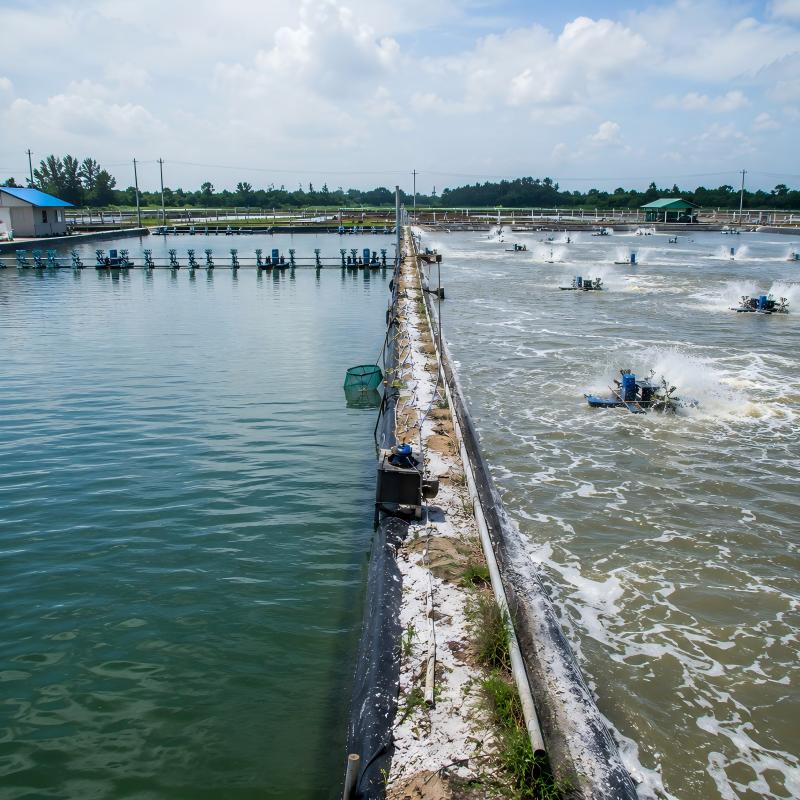
Aquaculture producers frequently observe an interesting phenomenon: two farms use the same feeding strategy, similar diets, and comparable management objectives, yet achieve noticeably different production results.
This variation is not unique to a particular feed ingredient or nutritional program. It is a natural consequence of the complex biological systems that exist within commercial aquaculture production.
Even when nutrition remains consistent, factors such as water quality, temperature stability, stocking density, microbial balance, disease pressure, and management execution can influence how animals respond.
As discussed in our article on environmental stress factors in aquaculture systems, production performance is shaped by multiple environmental and biological variables that interact continuously throughout the production cycle.
Understanding these sources of variability is essential for interpreting field results, evaluating nutritional strategies, and setting realistic performance expectations.
Why Farm-to-Farm Variability Is Normal in Aquaculture
Unlike controlled research facilities, commercial aquaculture farms operate under constantly changing environmental and management conditions.
Each farm develops its own production profile based on:
- Water source characteristics
- Seasonal environmental fluctuations
- Production intensity
- Feeding practices
- Biosecurity standards
- Animal health history
- Operational management
As a result, no two farms are exactly alike.
This means that aquatic animals are exposed to different levels of environmental pressure, creating variations in nutrient utilization, stress adaptation, immune function, and growth performance.
Rather than expecting identical outcomes, producers should recognize that some degree of biological variability is inherent in all aquaculture systems.
A Framework for Understanding Production Variability
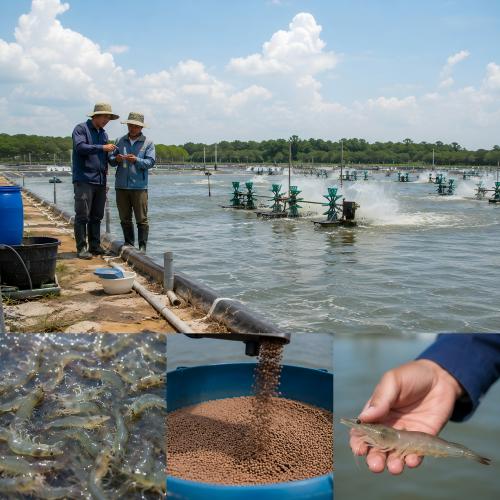
One useful way to understand performance differences is to view aquaculture production as a combination of four interacting systems.
| Production Level | Examples | Influence on Results |
|---|---|---|
| Environment | Temperature, oxygen, ammonia, salinity | Determines stress load and physiological stability |
| Animal | Species, age, genetics, health status | Influences response capacity and nutrient requirements |
| Nutrition | Feed formulation, digestibility, ingredient quality | Affects nutrient supply and utilization |
| Management | Feeding practices, monitoring, biosecurity | Determines consistency of production execution |
Each of these systems influences the others.
For example, excellent nutrition may not fully compensate for poor water quality, while strong environmental management may improve the effectiveness of a feeding strategy.
This interaction helps explain why production results often differ between farms even when similar nutritional programs are used.
Key Production Variables That Influence Outcomes
Several production variables commonly contribute to differences in farm performance.
| Production Variable | Mechanism | Potential Outcome |
|---|---|---|
| Water Quality | Influences respiration, metabolism, and physiological stress | Changes in growth and survival |
| Temperature Stability | Affects feed intake and metabolic efficiency | Variations in feed conversion and performance |
| Stocking Density | Influences competition and stress levels | Reduced uniformity and increased production pressure |
| Feed Formulation | Determines nutrient availability and digestibility | Differences in nutrient utilization |
| Disease Challenge | Diverts biological resources toward immune responses | Lower production efficiency |
| Management Practices | Affect consistency of environmental and nutritional control | Variability in production outcomes |
Because these factors rarely remain identical between farms, performance variability should be expected rather than viewed as unusual.
The Importance of Baseline Farm Conditions
One of the most overlooked reasons for performance differences is the condition of the farm before a nutritional program is implemented.
A farm’s starting point often influences the degree of improvement that can be observed.
Farm A
- Frequent ammonia fluctuations
- Higher stocking density
- Seasonal temperature instability
- Moderate disease pressure
Farm B
- Stable water quality
- Lower environmental stress
- Consistent management procedures
- Strong biosecurity practices
If both farms adopt the same nutritional intervention, the resulting responses may differ substantially.
Farm A may show larger improvements because the production system has more opportunities for stabilization and efficiency gains.
Farm B may already be operating under highly optimized conditions, making additional improvements more difficult to detect.
This does not necessarily indicate that the nutritional strategy is effective in one farm and ineffective in another. Instead, it reflects differences in baseline health status, environmental challenge, and operational stability.
Why Nutritional Responses Are Not Always Identical
Nutrition plays an important role in aquaculture performance, but nutritional responses occur within a broader production environment.
The effectiveness of a nutritional strategy may be influenced by:
- Existing animal health
- Environmental stability
- Feed consistency
- Microbial ecosystem balance
- Disease exposure
- Management quality
For example, maintaining digestive stability in aquatic species may support nutrient absorption and feed utilization. However, the measurable impact can vary depending on the production challenges already present within the farming system.
This is one reason why field trials conducted at different farms, in different regions, or during different seasons often generate different outcomes.
Understanding the context in which a nutritional response occurs is often more important than comparing numerical results alone.
Looking Beyond Growth When Evaluating Farm Results
Growth rate is often the most visible performance indicator, but it represents only one aspect of production success.
A comprehensive evaluation should consider multiple performance measurements.
| Performance Indicator | Production Relevance |
|---|---|
| Survival Rate | Directly influences harvest volume |
| Feed Conversion Ratio (FCR) | Reflects feeding efficiency |
| Animal Uniformity | Supports consistent market quality |
| Stress Resilience | Helps animals maintain performance during challenges |
| Production Consistency | Reduces variability between production cycles |
In many cases, the greatest value of a nutritional program may come from improving stability and reducing performance fluctuations rather than producing dramatic increases in growth alone.
Why Nutritional Solutions Often Show Stronger Responses Under Production Challenge
Many nutritional interventions are designed to support animal performance during periods of environmental or physiological challenge.
When animals encounter factors such as:
- Water quality fluctuations
- High stocking density
- Feed transitions
- Seasonal stress
- Disease pressure
their nutrient requirements and physiological demands may change.
Under these conditions, nutritional strategies that support digestive function, nutrient utilization, and microbial balance may become particularly relevant.
While nutritional support cannot eliminate all sources of variability, it may contribute to improved production consistency, particularly when combined with strong management practices and environmental control.
Conclusion
Differences in aquaculture performance between farms are a natural result of farm-to-farm variability.
Even when producers implement similar feeding programs, factors such as water quality, stocking density, baseline health status, environmental pressure, and management practices can influence how animals respond.
For this reason, the key question is often not whether a nutritional strategy works, but under which production conditions the response is most likely to occur.
By understanding the factors that drive production variability, aquaculture professionals can interpret field results more accurately, establish realistic expectations, and develop nutrition programs that support long-term performance and operational consistency.