
Why Quality Control Matters in Yeast Culture Production
In feed additive applications, consistency is everything. Unlike chemical additives, yeast culture products are biologically active and highly sensitive to production conditions. Even small variations in manufacturing can lead to significant differences in performance.
For feed producers, inconsistent yeast quality often results in unstable animal performance, reduced feed efficiency, and unpredictable outcomes in the field. As explained in our analysis of microbial stability in fermentation products, even minor fluctuations in stability can directly impact real-world results.
This is why yeast culture quality control is not just a technical issue—it is a critical factor that directly affects commercial outcomes.
Reliable quality control ensures:
- Stable performance across batches
- Predictable results in poultry, swine, and ruminant applications
- Reduced risk of customer complaints and product returns
Key Quality Control Points in Yeast Culture Manufacturing
Effective quality control in yeast culture manufacturing is built on multiple interconnected stages. Each step plays a role in ensuring final product consistency.
1. Raw Material Selection and Control
The quality of raw materials, including carbon sources and fermentation media, directly affects microbial growth and metabolite production.
Low-quality or inconsistent inputs can introduce impurities or unwanted microorganisms, increasing contamination risk and reducing fermentation efficiency. Strong suppliers implement strict raw material screening and supplier management systems to maintain stability from the very beginning.
2. Fermentation Process Monitoring
Fermentation is the core of yeast culture production. Key parameters such as temperature, pH, and dissolved oxygen must be precisely controlled throughout the process.
Advanced manufacturers use automated systems to monitor microbial growth curves and maintain optimal conditions. Poor fermentation control often leads to uneven metabolite profiles and inconsistent product performance. This is closely related to how fermentation conditions influence final outcomes, as discussed in our article on fermentation product performance and stability.
3. Contamination Prevention
Contamination is one of the biggest risks in microbial production. Bacteria, molds, or wild yeast strains can disrupt fermentation and compromise product safety.
Strict hygiene protocols, closed fermentation systems, and controlled environments are essential to minimize contamination risk. This is often a clear indicator of a manufacturer’s technical capability and production standards.
4. Drying and Post-Processing Technology
Drying is a critical step that directly affects the activity and stability of yeast culture products.
High-temperature drying may reduce production costs but can damage active compounds and reduce effectiveness. In contrast, controlled or low-temperature drying technologies help preserve both live yeast cells and beneficial metabolites.
This stage is often where significant differences between suppliers become evident, especially in maintaining long-term microbial stability.
5. Packaging and Storage Stability
Proper packaging protects yeast products from moisture, oxygen, and environmental exposure.
High moisture levels can lead to microbial degradation, while poor packaging can shorten shelf life. Reliable manufacturers design packaging systems that maintain product stability during transportation and storage, ensuring consistent performance at the point of use.
Key Testing Methods for Yeast Culture Quality
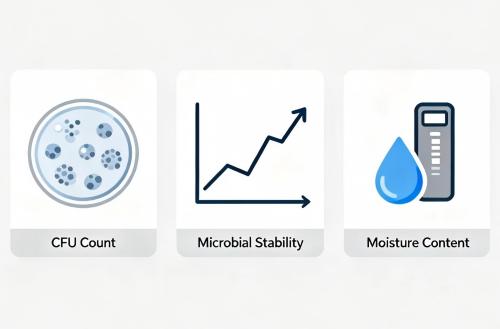
Beyond process control, laboratory testing is essential to verify product quality and ensure batch-to-batch consistency.
1. CFU Count (Viable Cell Count)
Colony Forming Unit (CFU) count measures the number of viable yeast cells in the product.
This is one of the most critical indicators of product effectiveness, especially for applications where live yeast activity is required. Significant variation in CFU counts between batches is a common sign of poor quality control.
2. Microbial Stability Testing
Microbial stability testing evaluates how well a product maintains its activity over time under different storage conditions.
This testing helps ensure that the product delivers consistent results throughout its shelf life, not just immediately after production. For a deeper understanding of how stability directly affects field performance, see our analysis on microbial stability in fermentation products.
3. Moisture Content Analysis
Moisture content directly impacts product stability and shelf life.
Excess moisture can accelerate microbial degradation and increase the risk of spoilage. Maintaining optimal moisture levels is essential for preserving product quality during storage and transportation.
4. Contaminant Detection
Testing for contaminants such as harmful bacteria, molds, or toxins is a critical part of quality assurance.
Reliable manufacturers implement strict testing protocols to ensure product safety and compliance with feed industry standards.
Common Quality Issues in Low-Standard Yeast Products
Not all yeast culture products on the market meet the same standards. Inadequate quality control can lead to several common issues:
- Inconsistent CFU levels across batches
- Poor microbial stability during storage
- Loss of activity after processing
- Contamination risks due to weak production control
- Unstable performance in real feeding conditions
These issues often explain why some yeast products fail to deliver expected results, especially when fermentation control and stability are not properly managed.
How to Evaluate a Reliable Yeast Culture Supplier
For buyers and distributors, selecting the right supplier is essential. A reliable yeast culture manufacturer should demonstrate strong quality control capabilities across the entire production process.
Here are key factors to evaluate:
- Clear quality control system covering raw materials, fermentation, and final product
- Consistent batch data, including CFU count and stability results
- Advanced production technology, especially in fermentation and drying
- Strict contamination control standards
- Application support for different livestock sectors
You can also explore high-quality Saccharomyces cerevisiae culture designed for consistent performance across feed applications.
For application-specific needs, solutions are available for poultry, swine, and ruminant production systems, depending on feeding goals and conditions.
Choosing a supplier is not just about price—it is about selecting a partner with a reliable and proven quality control system.
Conclusion
Quality control is the foundation of effective yeast culture manufacturing. From raw material selection to fermentation, drying, and final testing, every step plays a role in ensuring product consistency and performance.
For feed producers and distributors, understanding these standards is essential for making informed purchasing decisions.
Ultimately, choosing a yeast culture supplier means choosing a quality control system. The more robust and transparent that system is, the more reliable your results will be in real-world applications.
For buyers seeking documented quality control data and batch consistency, contact our team to request detailed stability reports, technical specifications, and application support.