
Livestock farms across Vietnam, Thailand, and Indonesia are increasingly seeking feed additives that improve growth, stabilize digestion, and reduce production costs.
Two of the most popular options are yeast culture and probiotics. Both promise healthier animals and improved feed efficiency — but which one truly delivers results for farms in Southeast Asia’s tropical climate?
This article compares yeast culture and probiotics across key performance factors and offers guidance for choosing the right additive for your livestock operation.
Why This Comparison Matters
Livestock producers face several challenges:
- Rising feed costs
- Heat and humidity stress
- Digestive instability in young animals
- Inconsistent production performance
Selecting the wrong additive can waste money, reduce efficiency, and create unstable growth. By understanding the differences between yeast culture and probiotics, farms can make data-driven decisions.
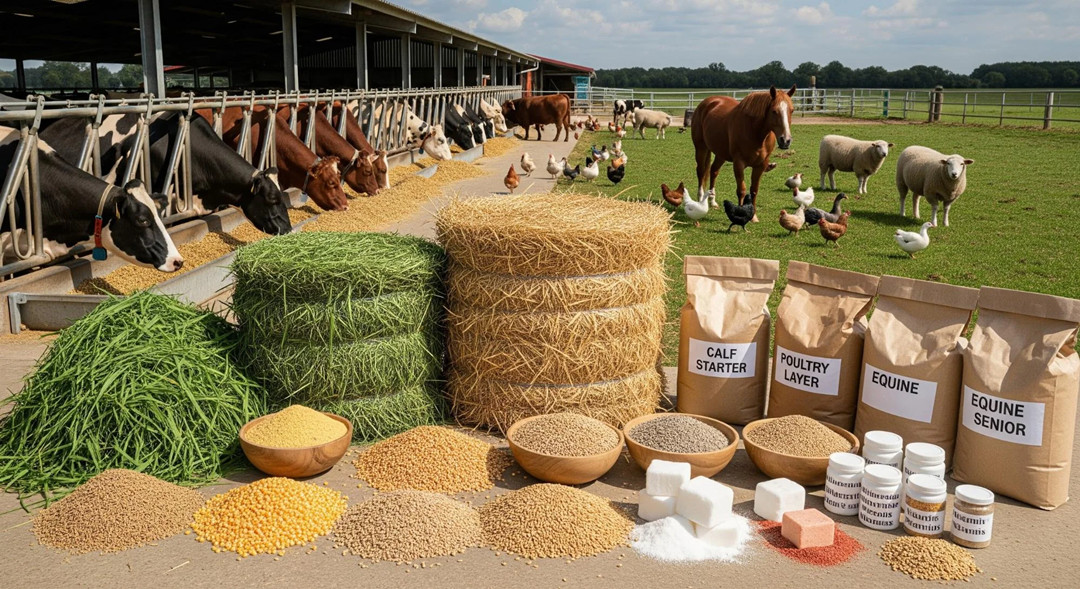
Understanding the Basics
Probiotics are live microorganisms added to feed to support gut microbiota and improve digestion.
Yeast culture, on the other hand, is produced through controlled fermentation of selected yeast strains. It contains:
- Fermentation metabolites
- Digestive-supporting nutrients
- Compounds that promote beneficial microbial activity
For a deeper explanation of yeast culture and its benefits, see our article: what is yeast culture feed additive
Key Comparison Factors
| Feature | Yeast Culture | Probiotics |
|---|---|---|
| Digestive Stability | Provides metabolites that stabilize gut environment, particularly under stress | Live bacteria can be sensitive to heat and storage conditions |
| Heat Stress Performance | Maintains intestinal balance in tropical climates | Less effective during high-temperature stress |
| Feed Conversion Efficiency | Improves nutrient absorption and feed utilization consistently | May improve digestion, but results can vary by strain and feed type |
| Application Across Species | Pigs, poultry, ruminants, aquaculture | Mainly pigs and poultry; less proven in ruminants and aquaculture |
| Integration into Feed | Easy to include in premixes and complete feeds | Sensitive to feed processing; may require specialized handling |
| Cost-Effectiveness | Long-term ROI through consistent performance | Initial cost may be lower, but inconsistent results can reduce ROI |
Practical Implications for Southeast Asian Farms
Pigs
Weaning piglets are prone to digestive instability. Yeast culture provides consistent gut support, while probiotics may require careful storage and handling to remain effective.
Poultry
Both additives improve feed conversion, but yeast culture delivers more predictable growth rates under high heat, common in tropical climates.
Ruminants
Probiotics are rarely used in ruminants at a commercial scale. Yeast culture supports rumen fermentation efficiency, fiber digestion, and milk production stability.
Aquaculture
Probiotics often struggle in aquatic feed formulations. Yeast culture promotes nutrient absorption and survival rate, making it a practical choice for shrimp and fish farms in Vietnam and Southeast Asia.
Real-World Farm Results
Several studies and field trials in Southeast Asia show:
- Yeast culture reduces feed costs by 3–5% by improving nutrient utilization
- Probiotics improve gut microbiota, but performance varies widely depending on strain and feed type
- Farms using yeast culture report more consistent weight gain, healthier animals, and lower mortality rates
This consistency is critical for commercial operations where feed efficiency directly affects profitability.
Choosing the Right Additive for Your Farm
When deciding between yeast culture and probiotics, consider:
- Climate Conditions – Yeast culture handles heat stress better.
- Animal Type – Yeast culture is effective across more livestock types.
- Feed Formulation – Yeast culture integrates easily into premixes and complete feeds.
- Long-Term ROI – Yeast culture provides stable, predictable benefits.
For farms seeking a reliable, science-backed solution, yeast culture is often the preferred choice in Southeast Asia.
Why Challenge Biotechnology (Yantai) Co., Ltd. Is the Trusted Supplier
Challenge Biotechnology (Yantai) Co., Ltd. has decades of experience in producing high-quality yeast culture feed additives for farms across Southeast Asia.
We provide:
- Consistent product quality
- Technical support for formulation and application
- Proven field results in pigs, poultry, ruminants, and aquaculture
- Guidance for maximizing feed efficiency and profitability
With our yeast culture products, farms can reduce feed costs, stabilize growth, and improve animal health — even in tropical conditions.
Frequently Asked Questions (FAQ)
Q1: Can I use yeast culture and probiotics together?
Yes. Combining yeast culture with probiotics can enhance gut health, but yeast culture alone often provides more predictable results.
Q2: Which is better for shrimp farming?
Yeast culture is more suitable due to better nutrient absorption and stress tolerance.
Q3: How do I know the right dosage for my livestock?
Dosage depends on species, age, and feed type. Our technical team at Challenge Biotechnology (Yantai) Co., Ltd. can provide guidance.
Q4: Is yeast culture safe for long-term use?
Absolutely. It is widely used in livestock and aquaculture feeds across Southeast Asia without negative effects.
Conclusion
While both yeast culture and probiotics can benefit livestock, yeast culture consistently outperforms probiotics in tropical Southeast Asian conditions, offering:
- Stable feed conversion
- Digestive support under stress
- Long-term cost efficiency
- Broad applicability across species
For farms in Vietnam, Thailand, Indonesia, and beyond, yeast culture feed additives from Challenge Biotechnology (Yantai) Co., Ltd. provide a practical, reliable, and scientifically proven solution for modern livestock and aquaculture operations.